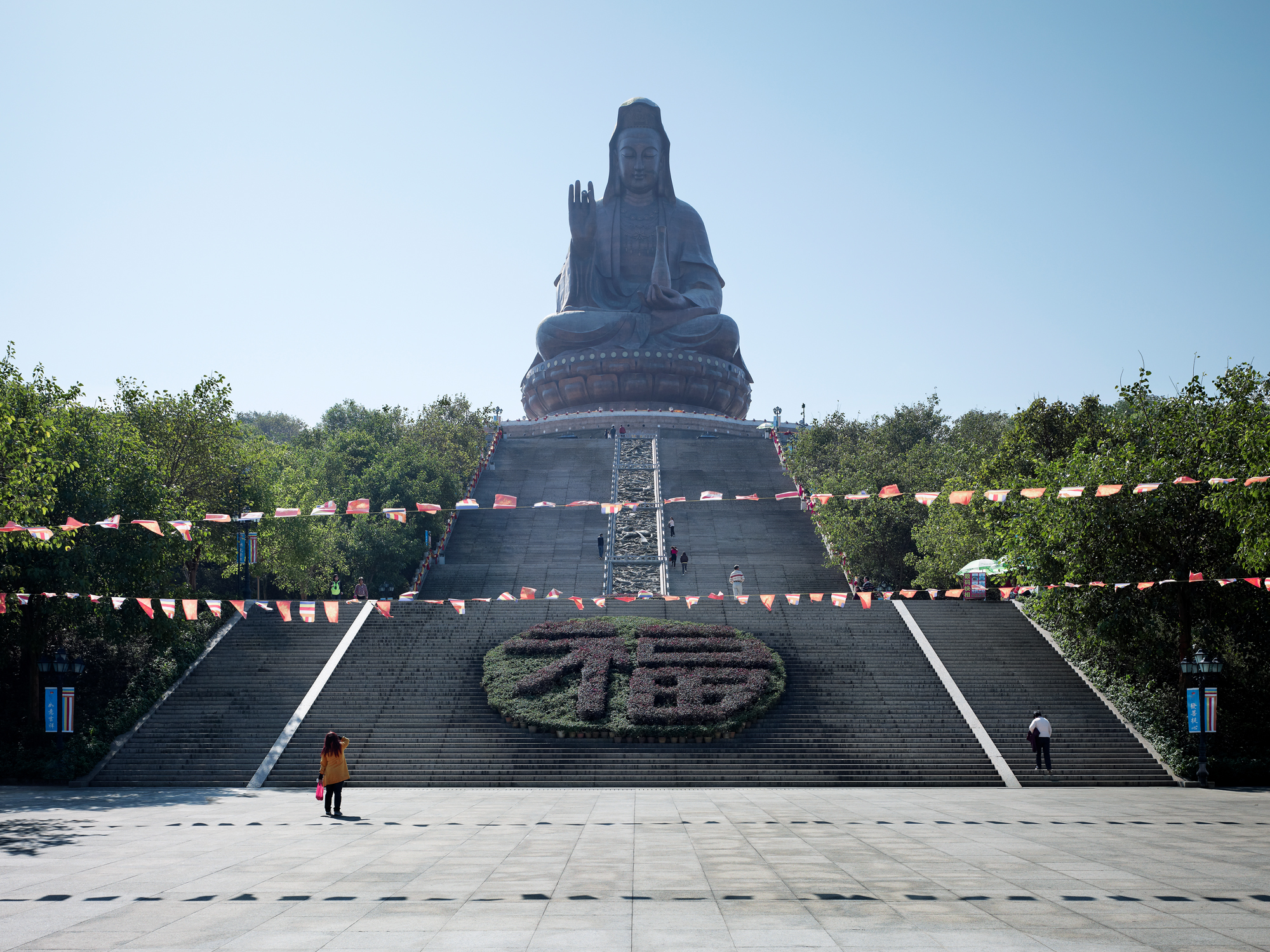
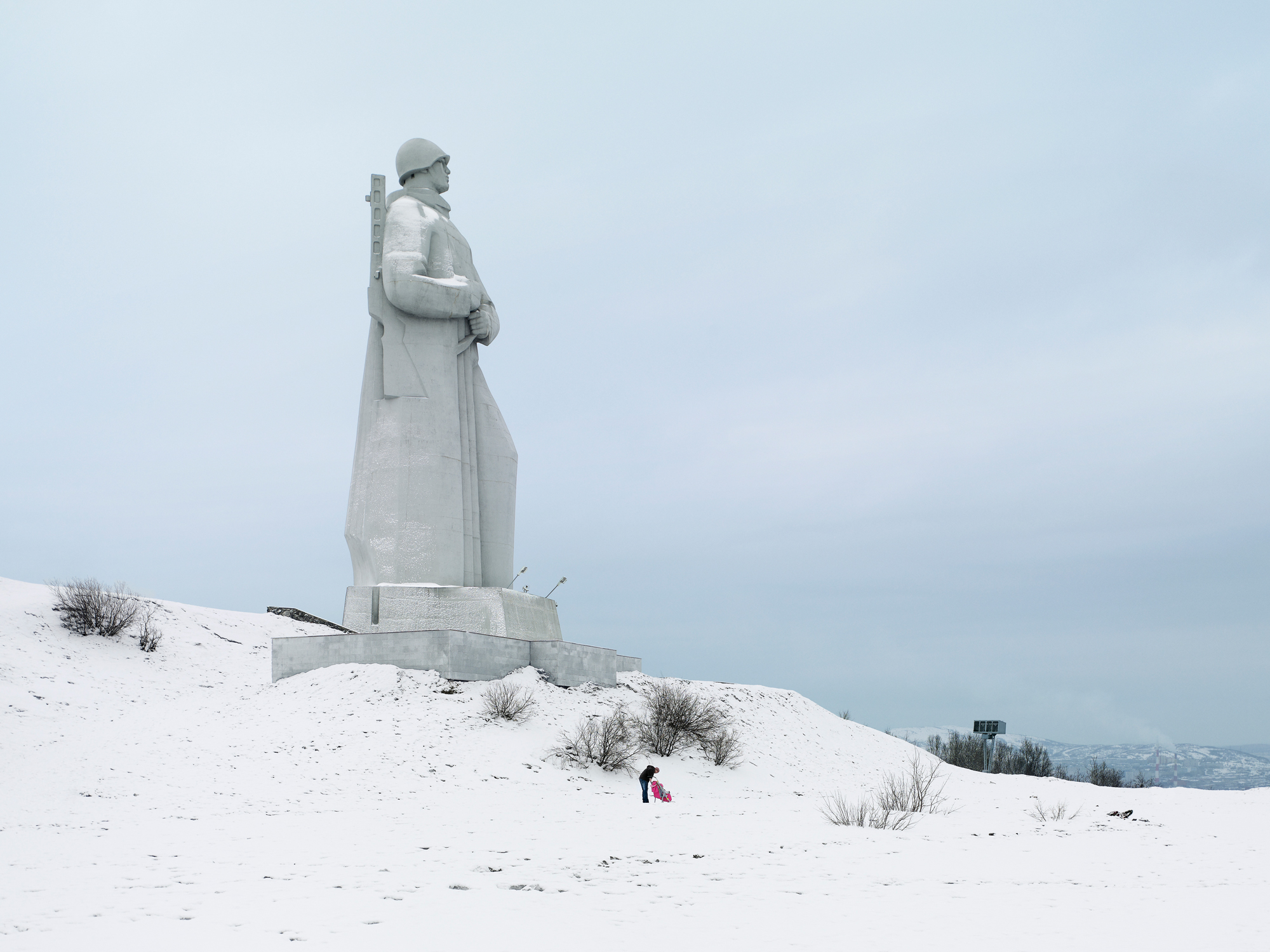
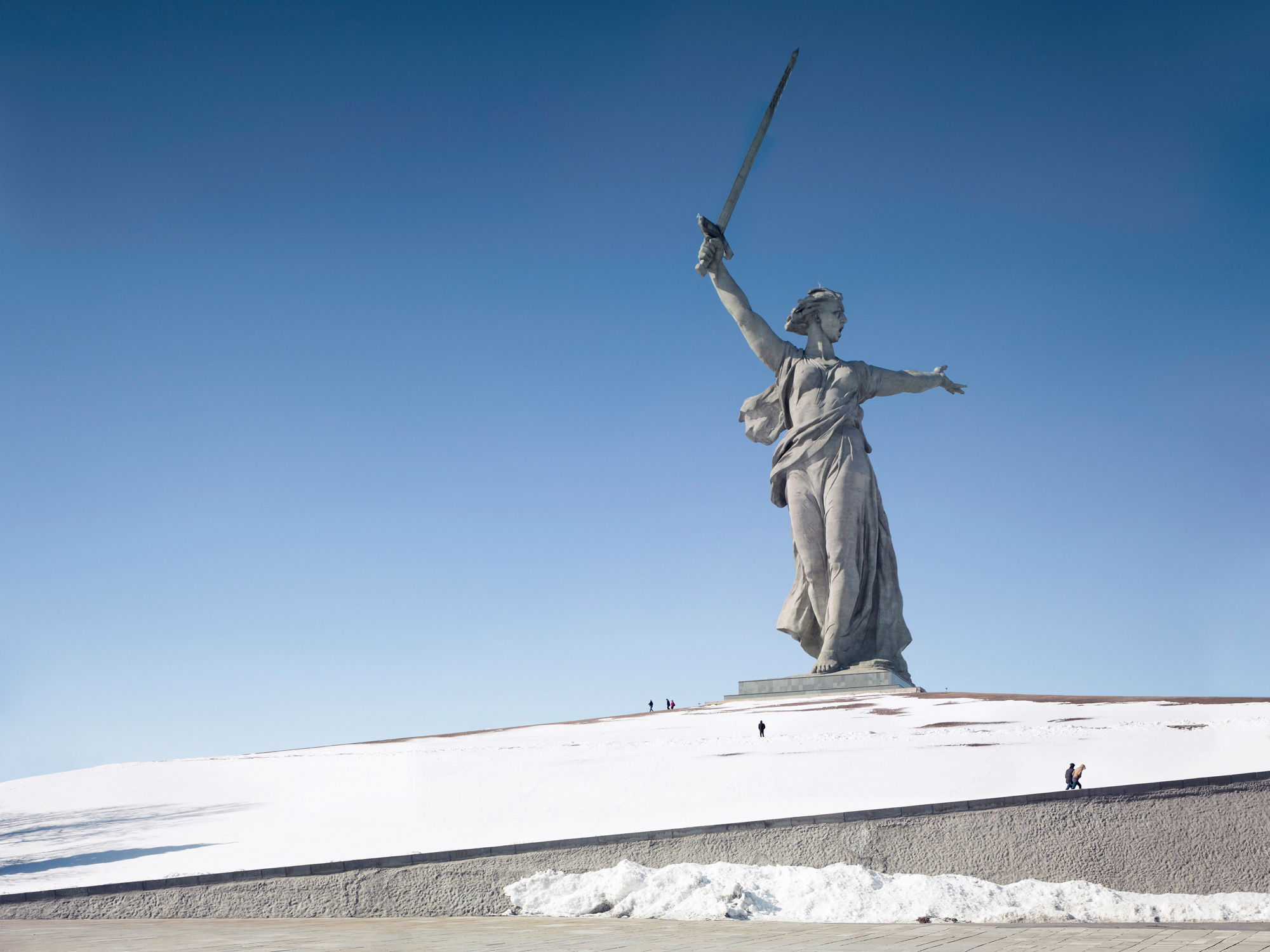
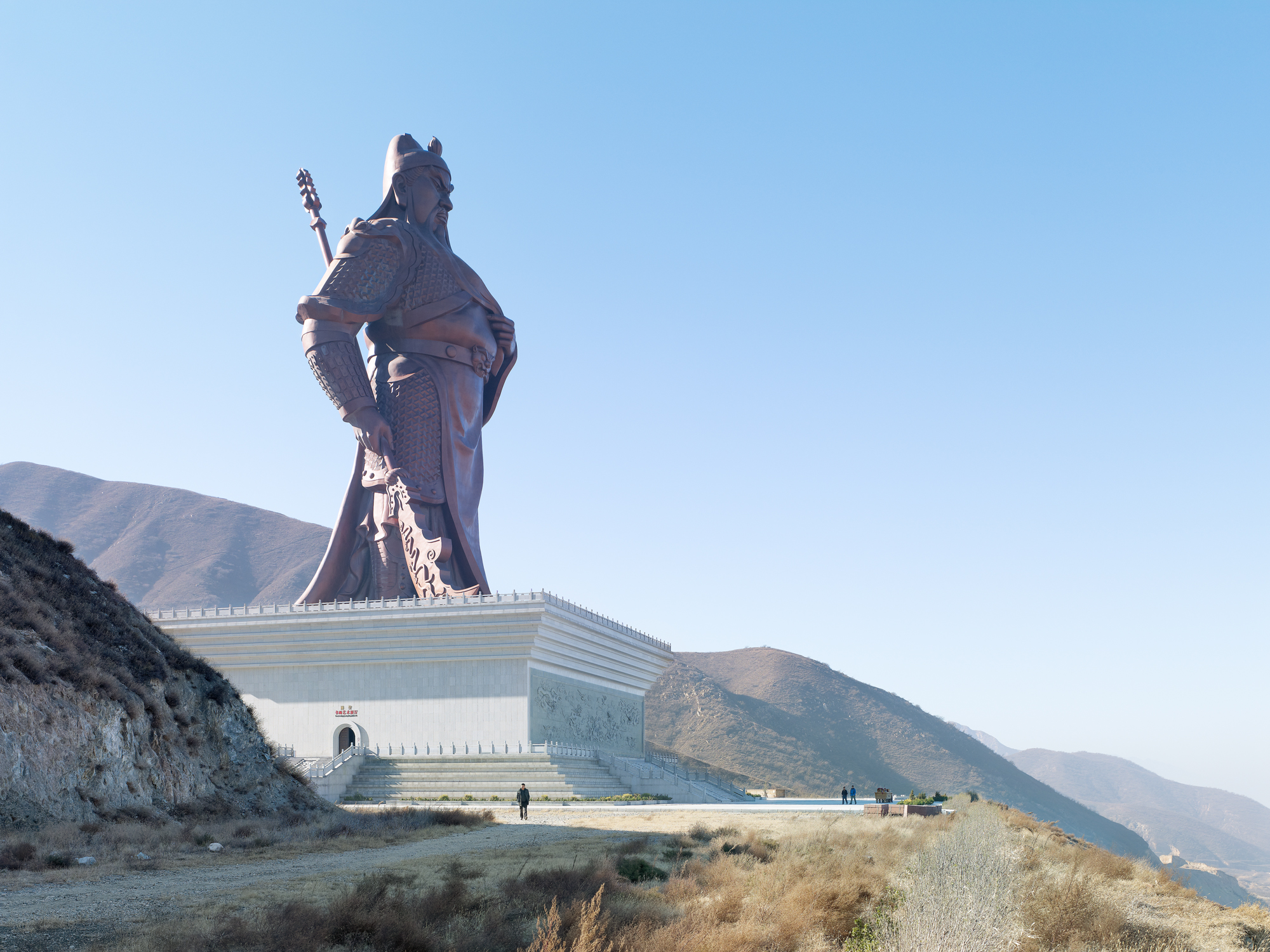
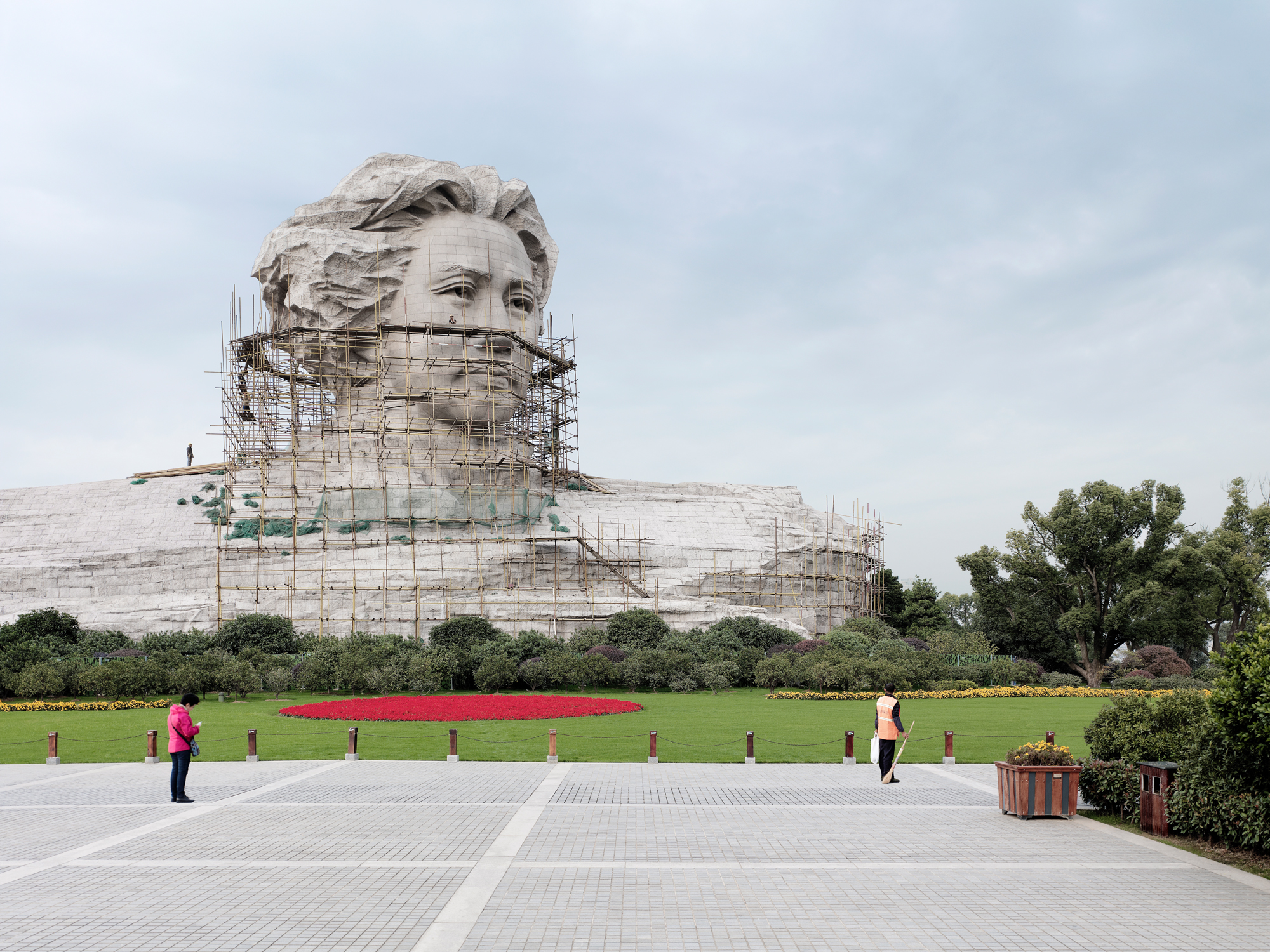
Statues are often idealized works of art, ideological, political or religious representations, and turn their subjects into fascinating eternal figures.
Once erected to keep alive the memory of a particular person or event, in a given culture, it laststhrough many generations and establishes itself
a symbol for the community.
Statues are even more influential when they are outstanding. An edifice can be said to be monumental when it is unusual, extraordinary. It has to
be abnormal, as exceptional as the political or religious power itself, also inseparable from its symbolic aspects. The series “Colosses” is a study of
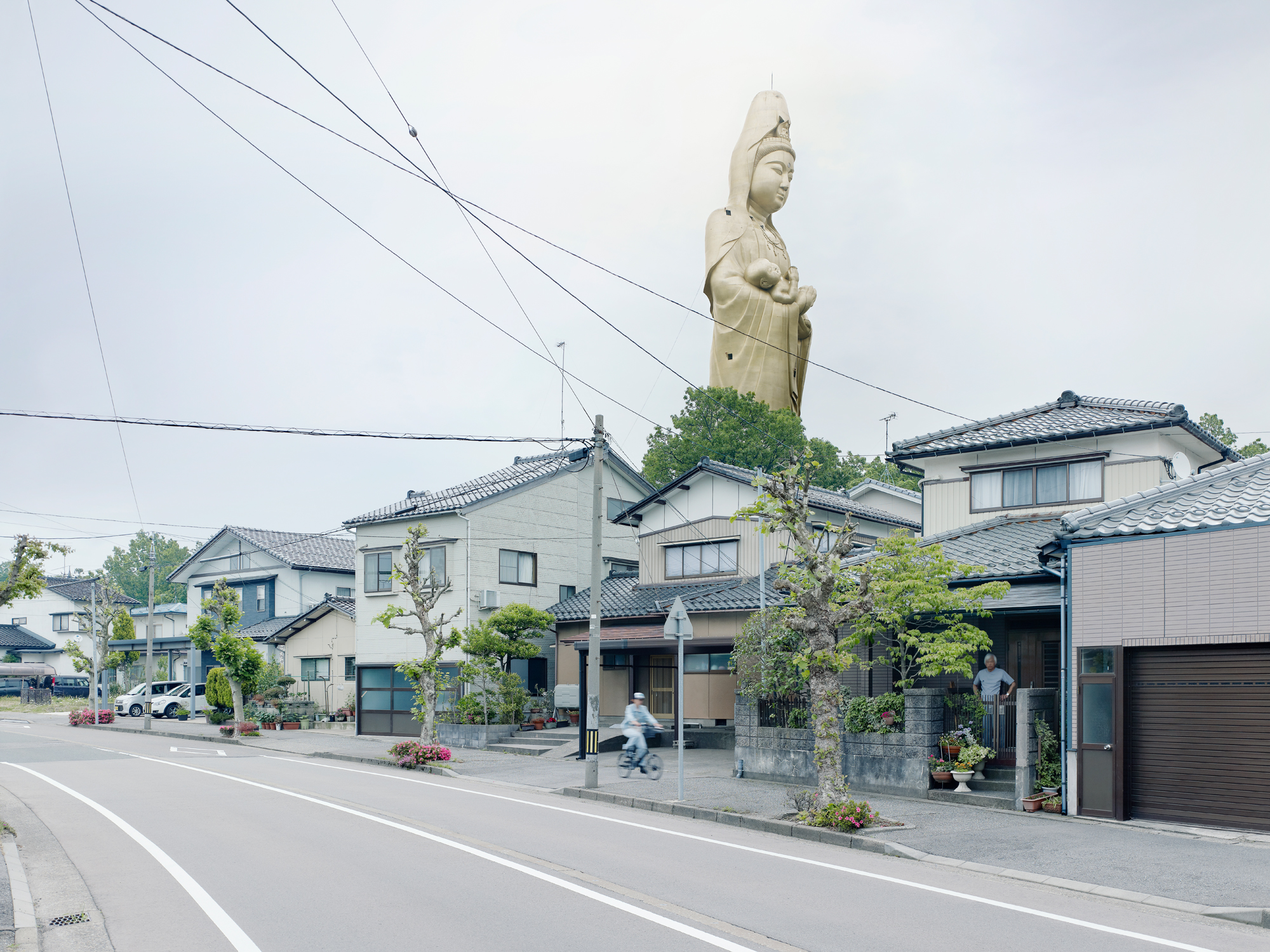
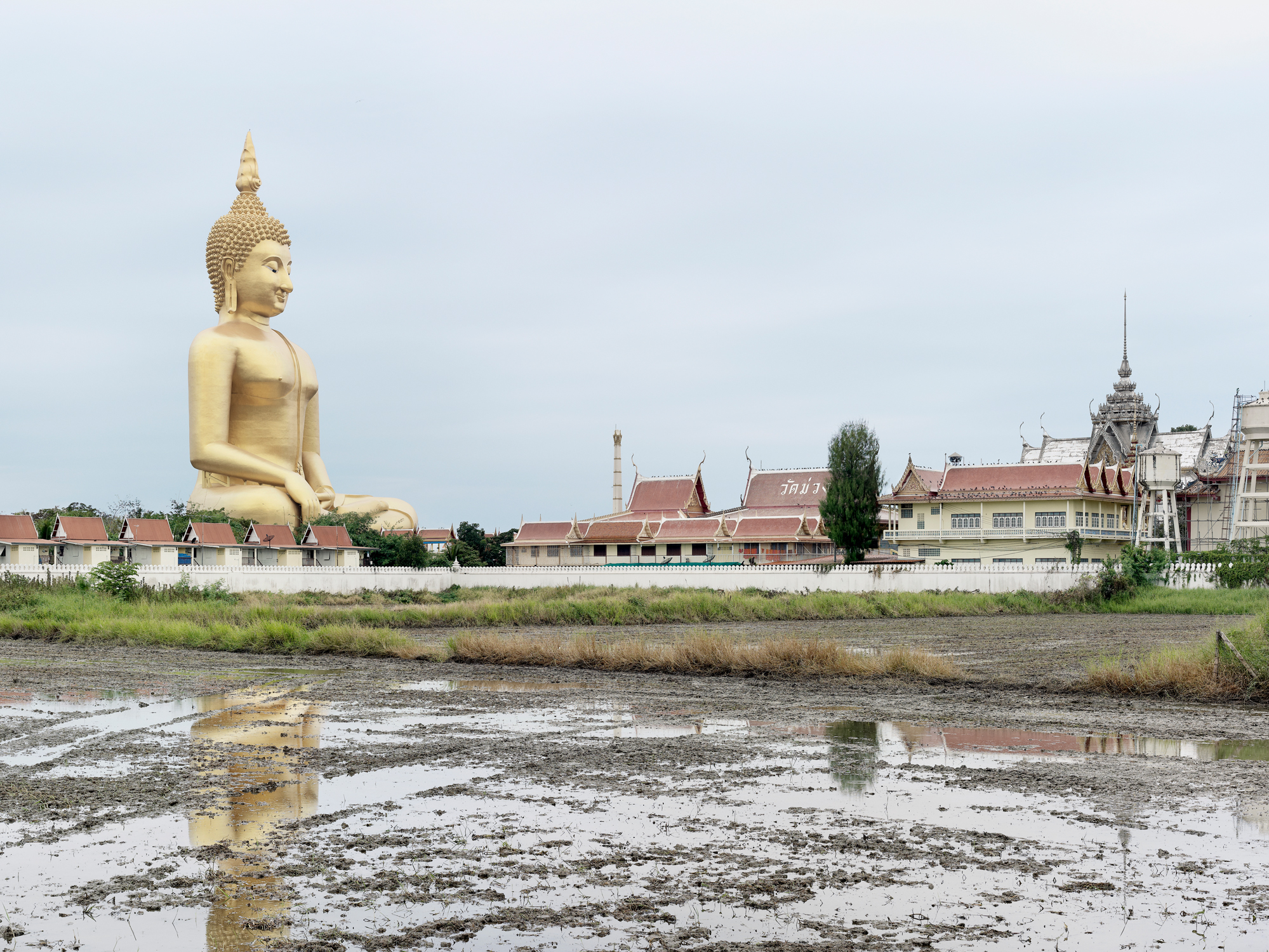
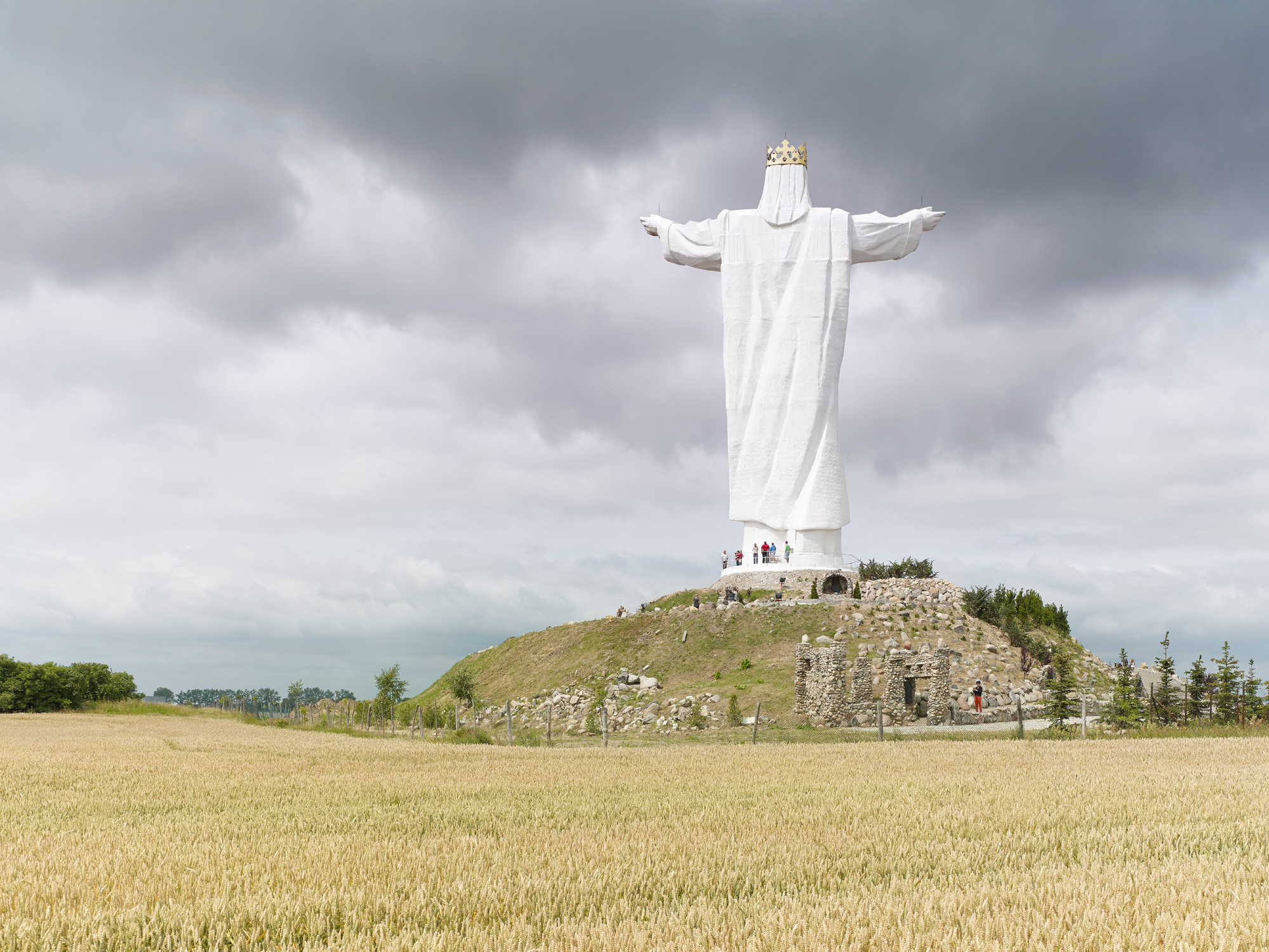
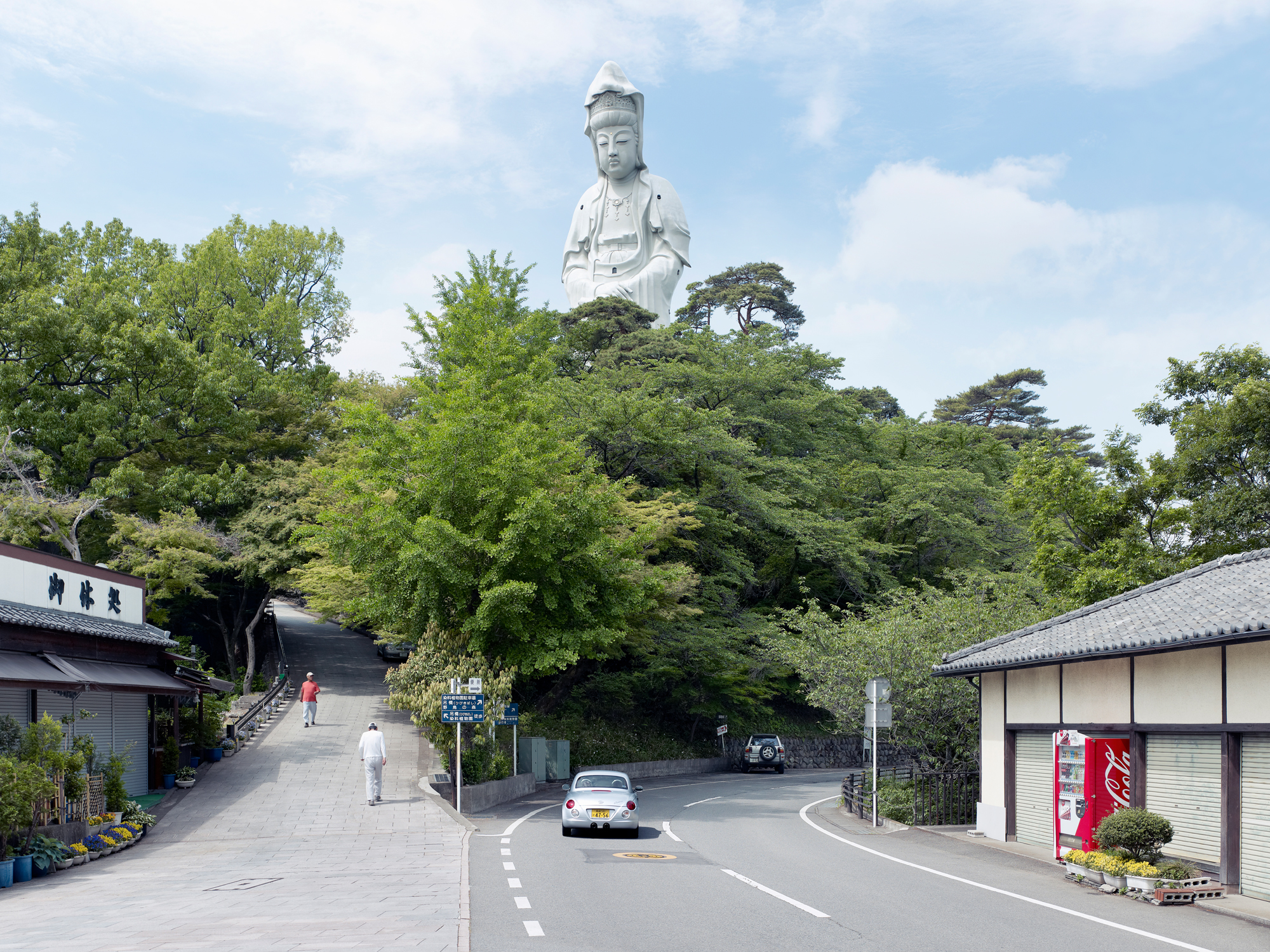
the landscapes embracing those monumental commemorative statues.
Although hugeness is appealing, exhilarating or even fascinating, I was first intrigued by the human need to build gigantic declarations.Then, I
asked myself how such « works » could be connected to their surroundings. How can they fit in the landscapes, despite their excessive dimensions
and their fundamental symbolic and traditional functions?
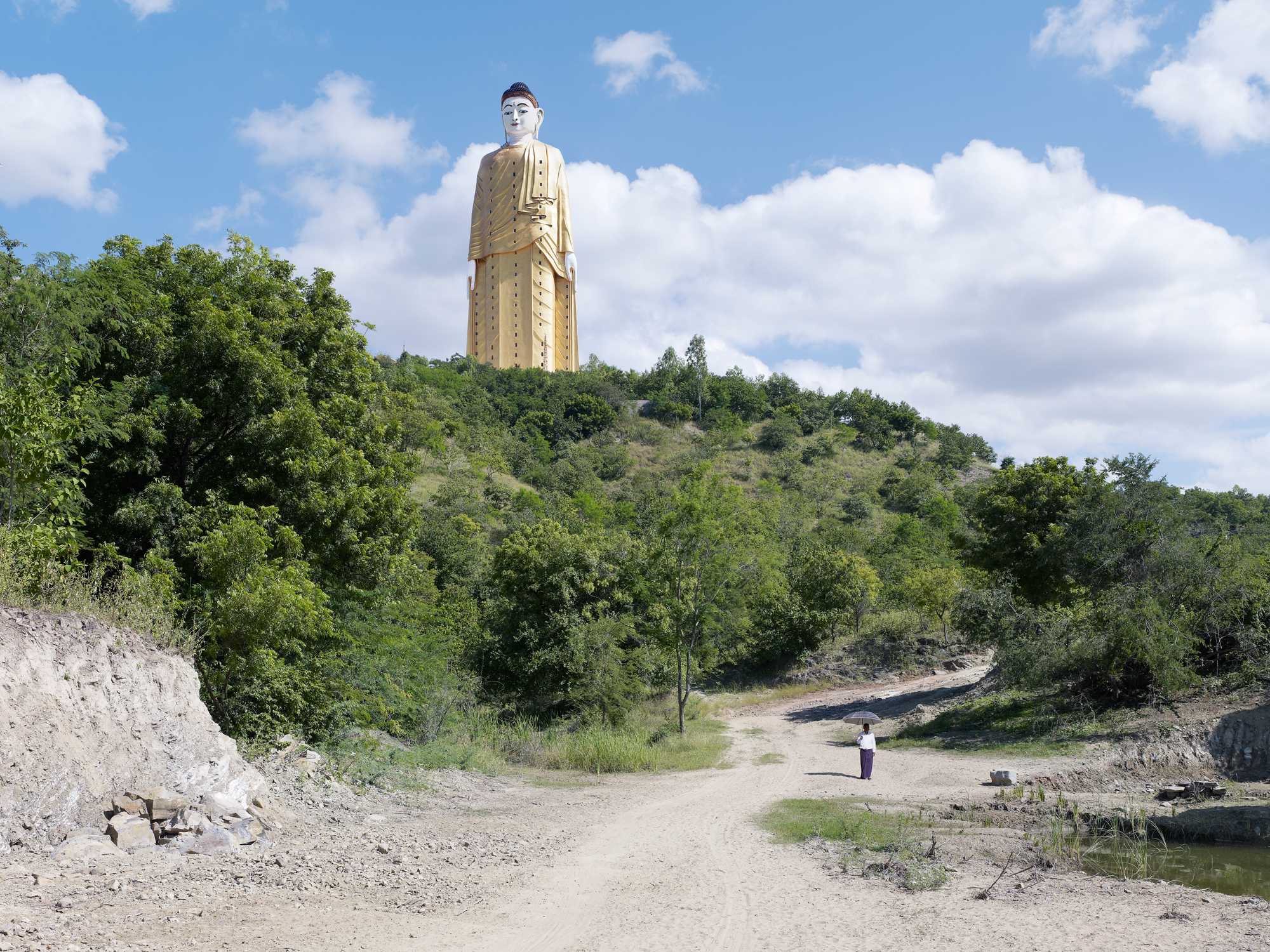
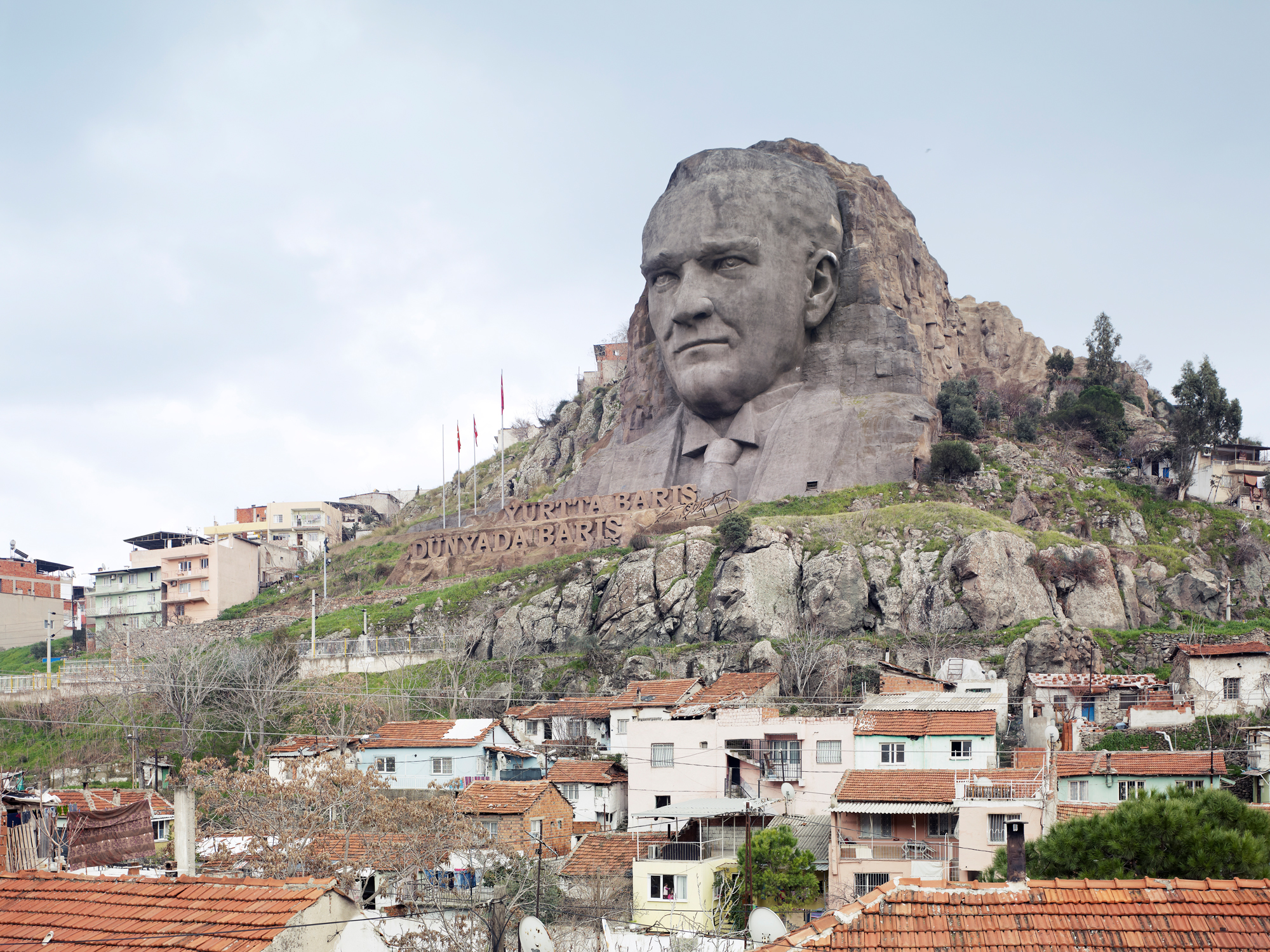
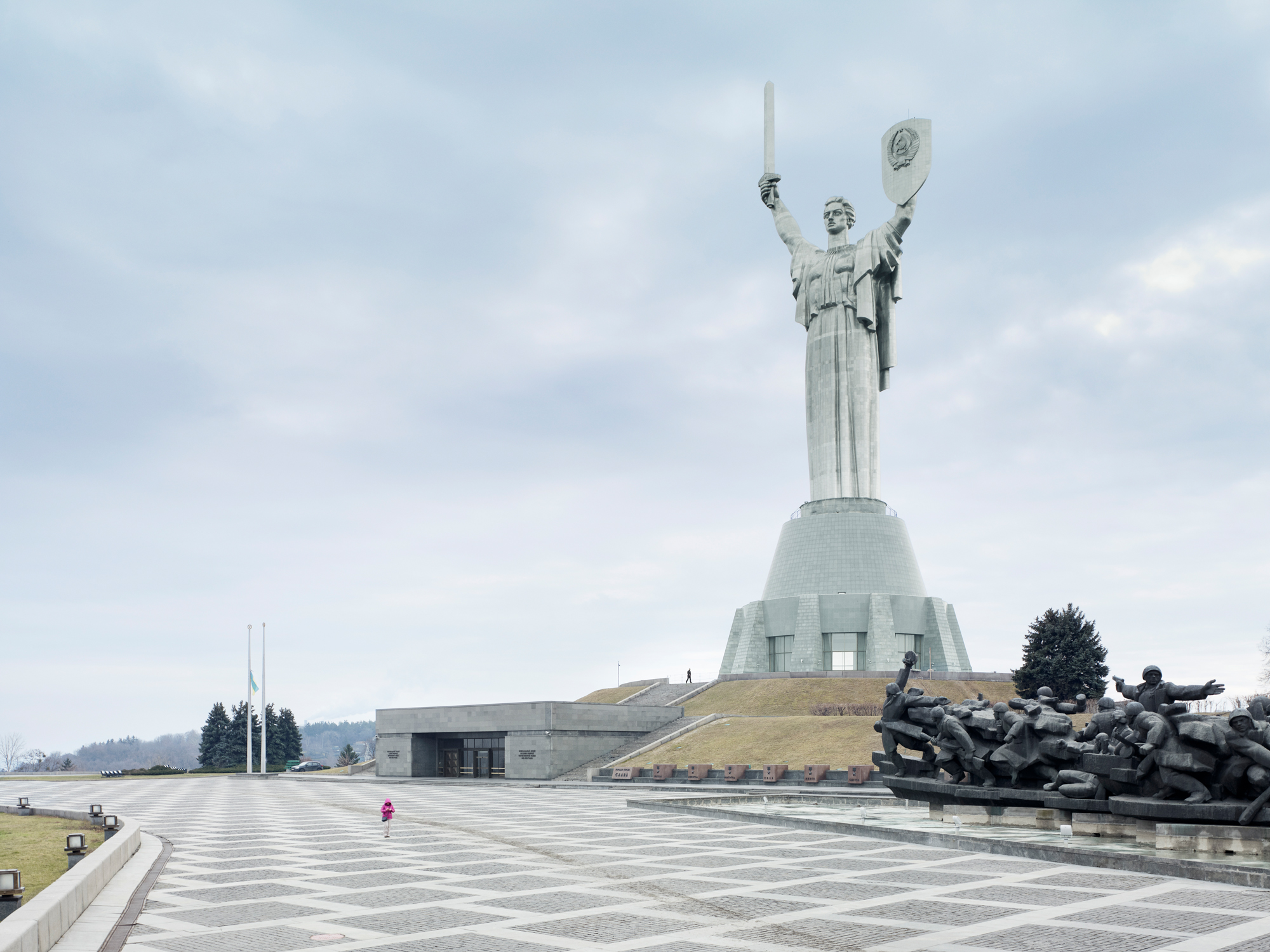
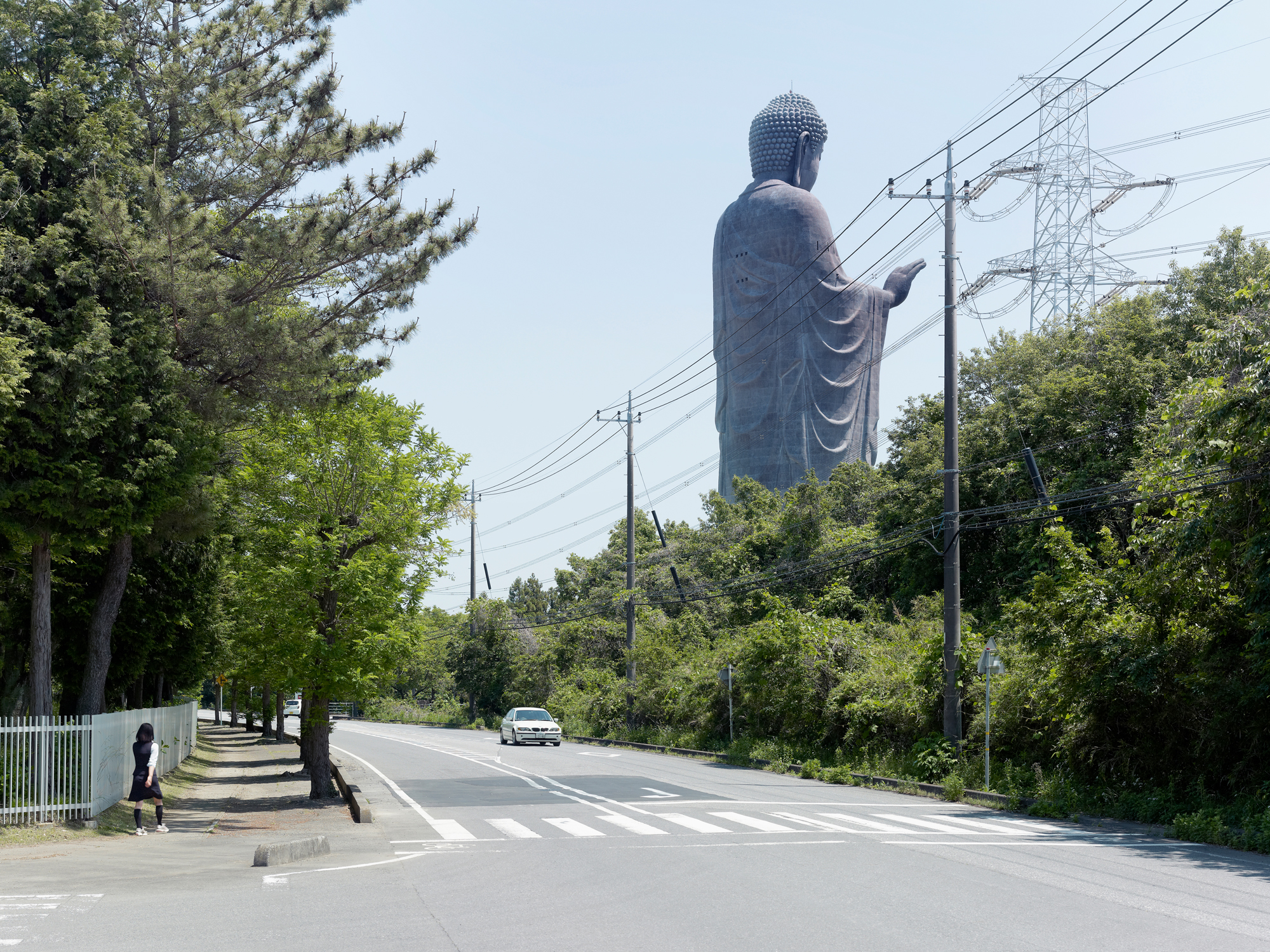
I chose to photograph the statues from a standpoint outside their formal surroundings, and to favour a more detached view, watching them from
the sidelines. This detachment enabled a wider view of the landscape and to place the monuments in a more contemporary dimension. Human
figures appear sporadically and confront their own insignificance to the greatness of symbols.
The physical relationship to the statue’s surroundings explicitly recalls the spectator’s body and its integration in time. Thus, the characters are
reduced to miniatures and emphasize the disproportion.
As a wave of « statuomania » swept over the world in the 1990s, many huge statues were built. Most of them are located in Asia and represent the
Buddha. The world’s highest statue is under construction in India. It will honour the independence hero Sardar Patel and will reach 182 meters.