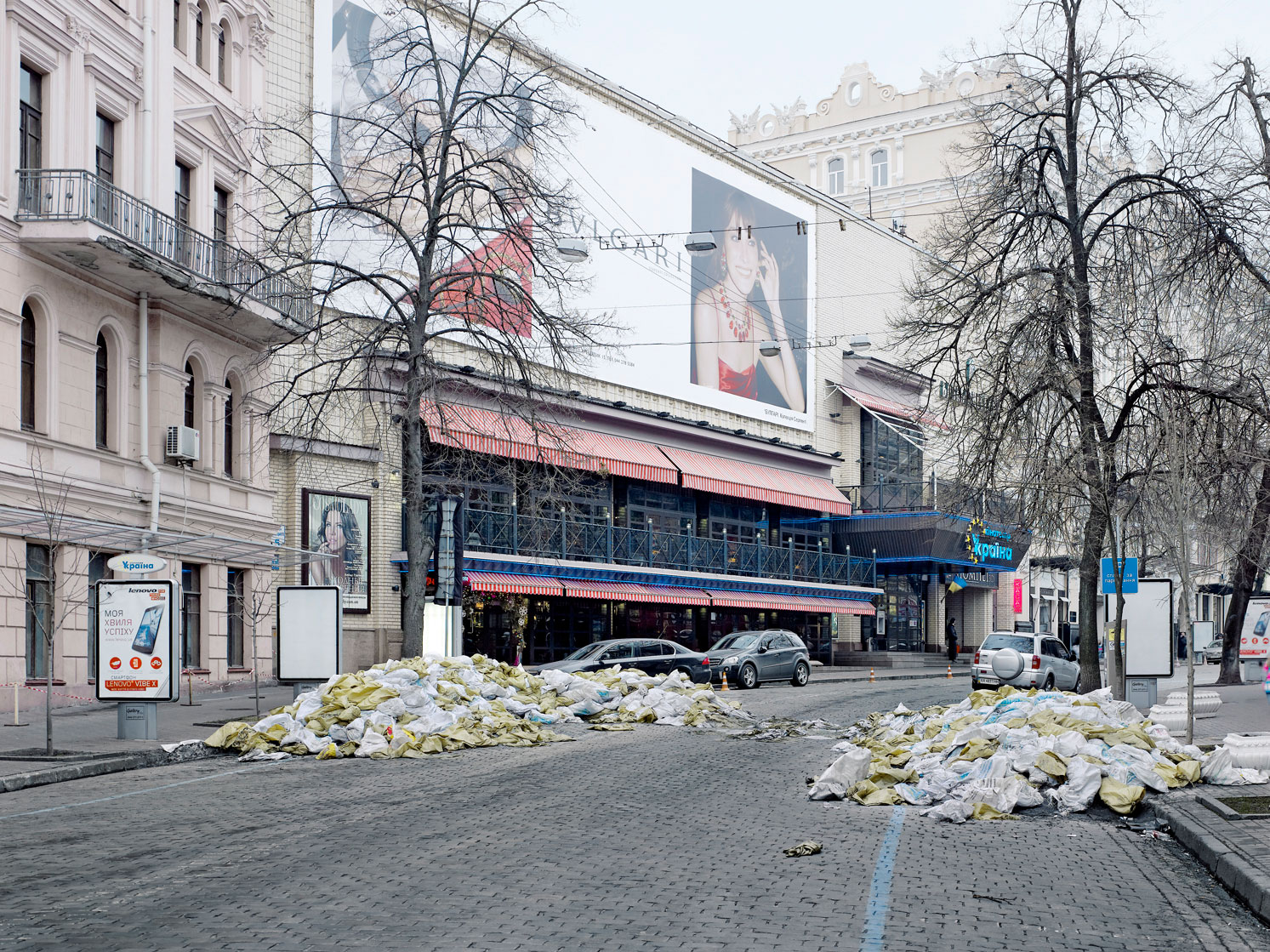
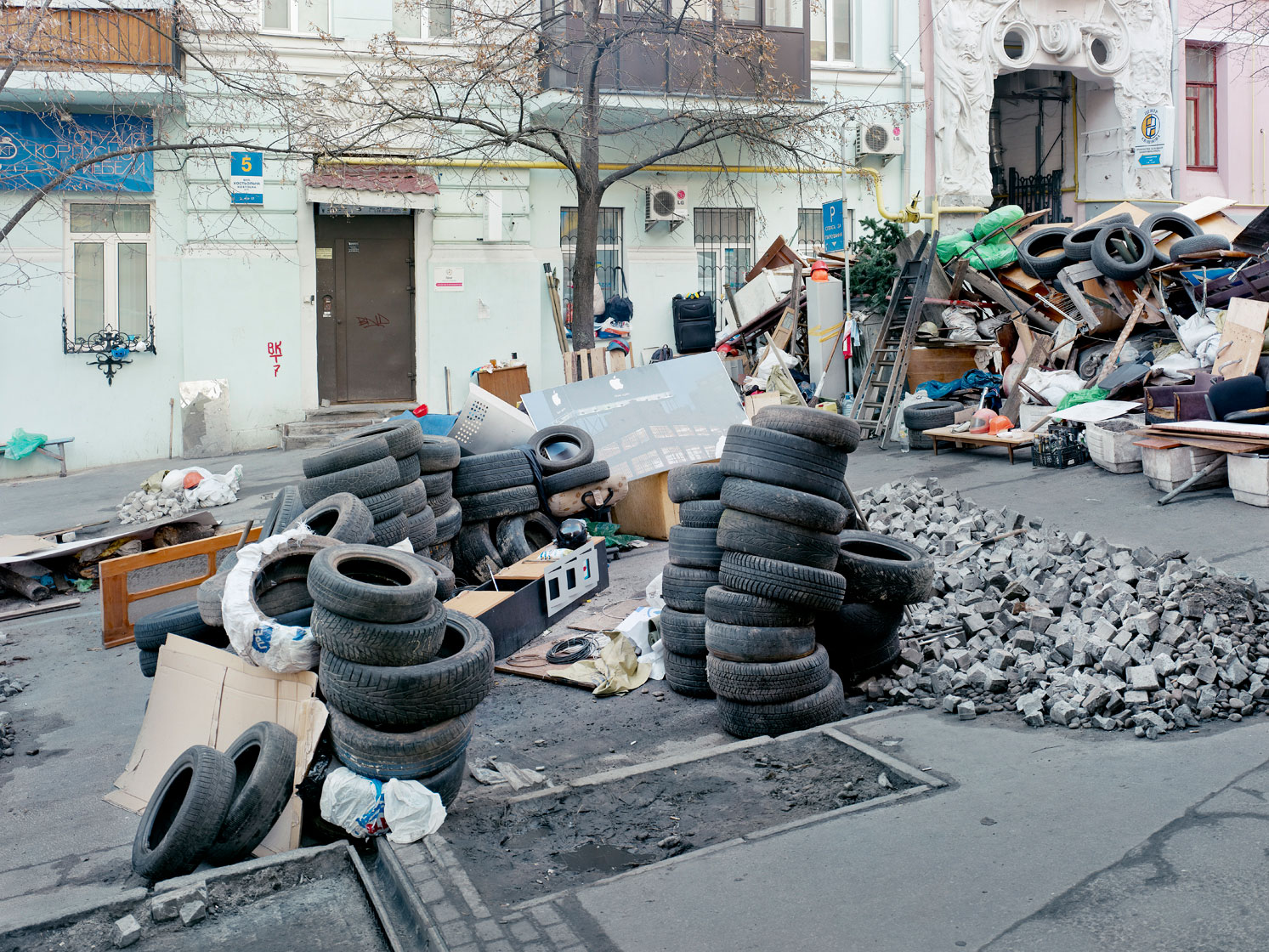
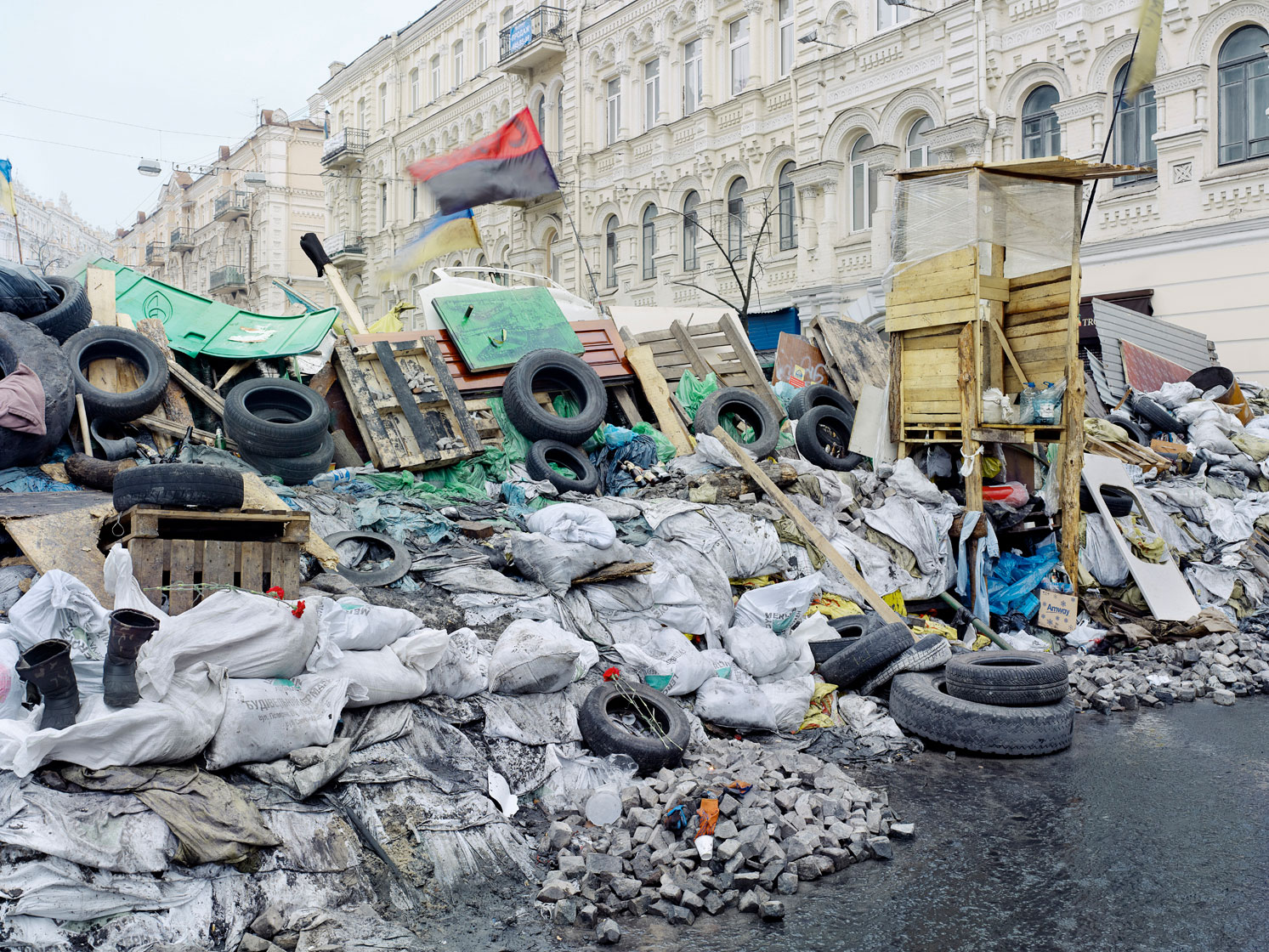
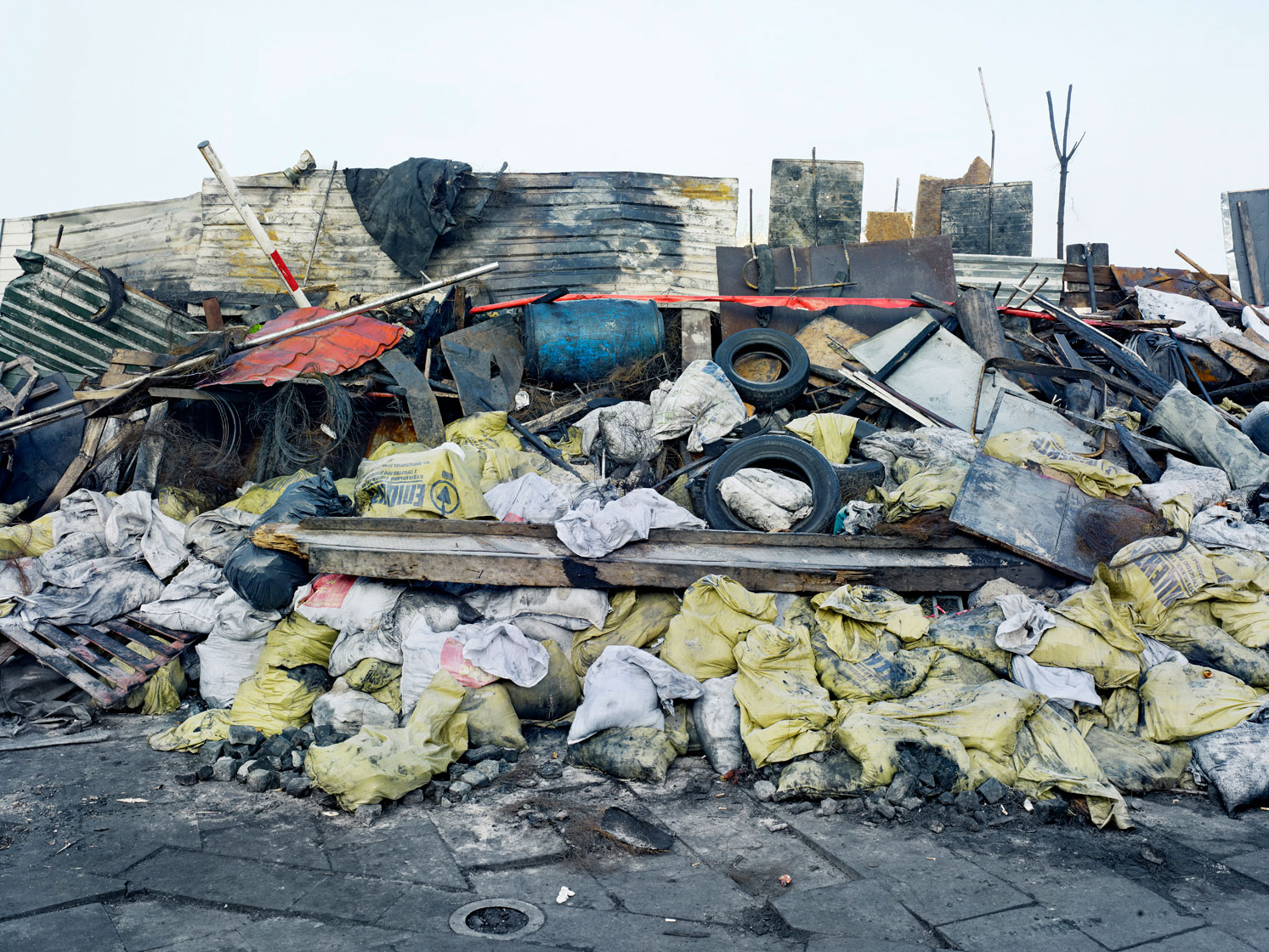
︎︎︎︎
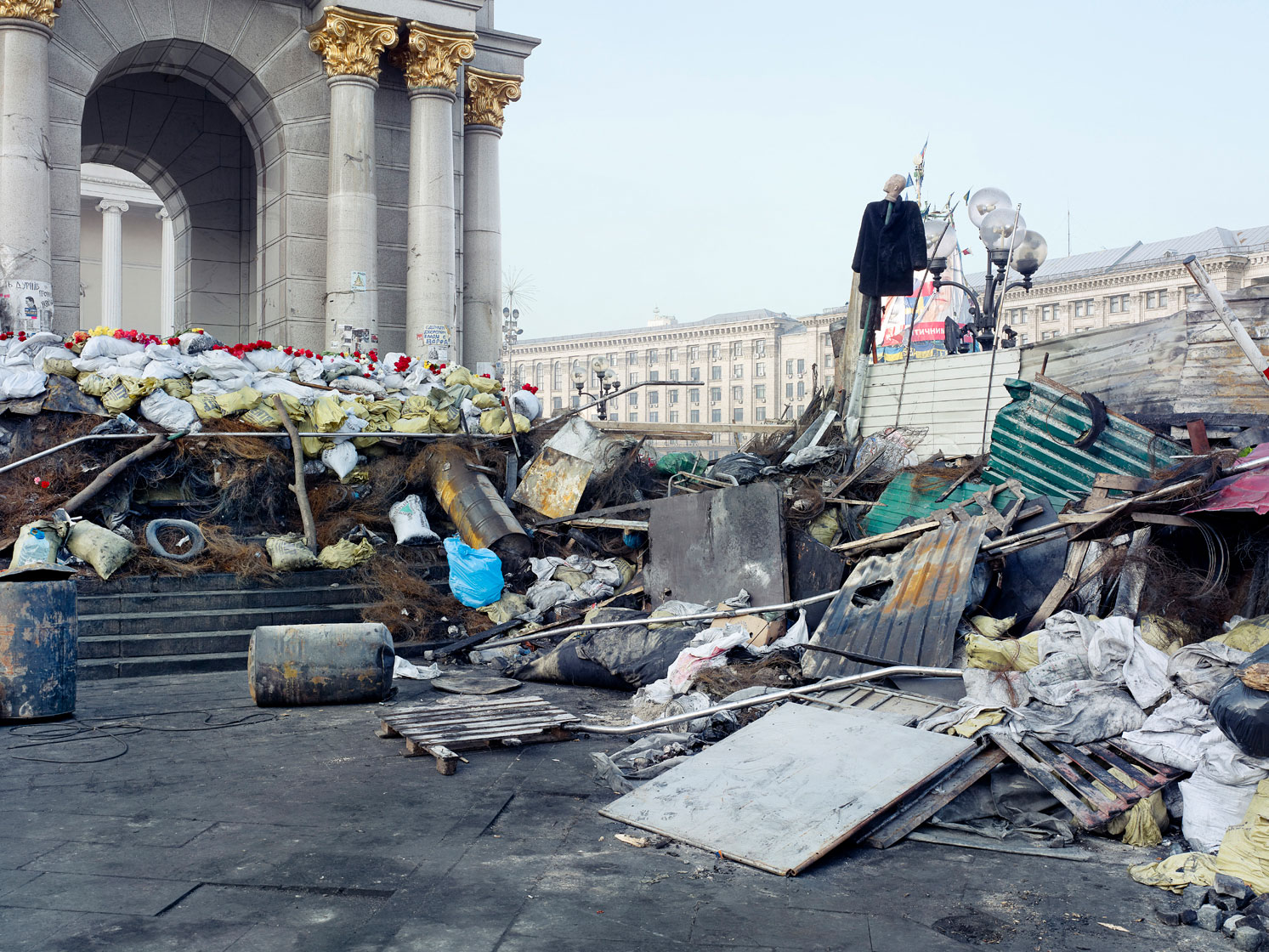
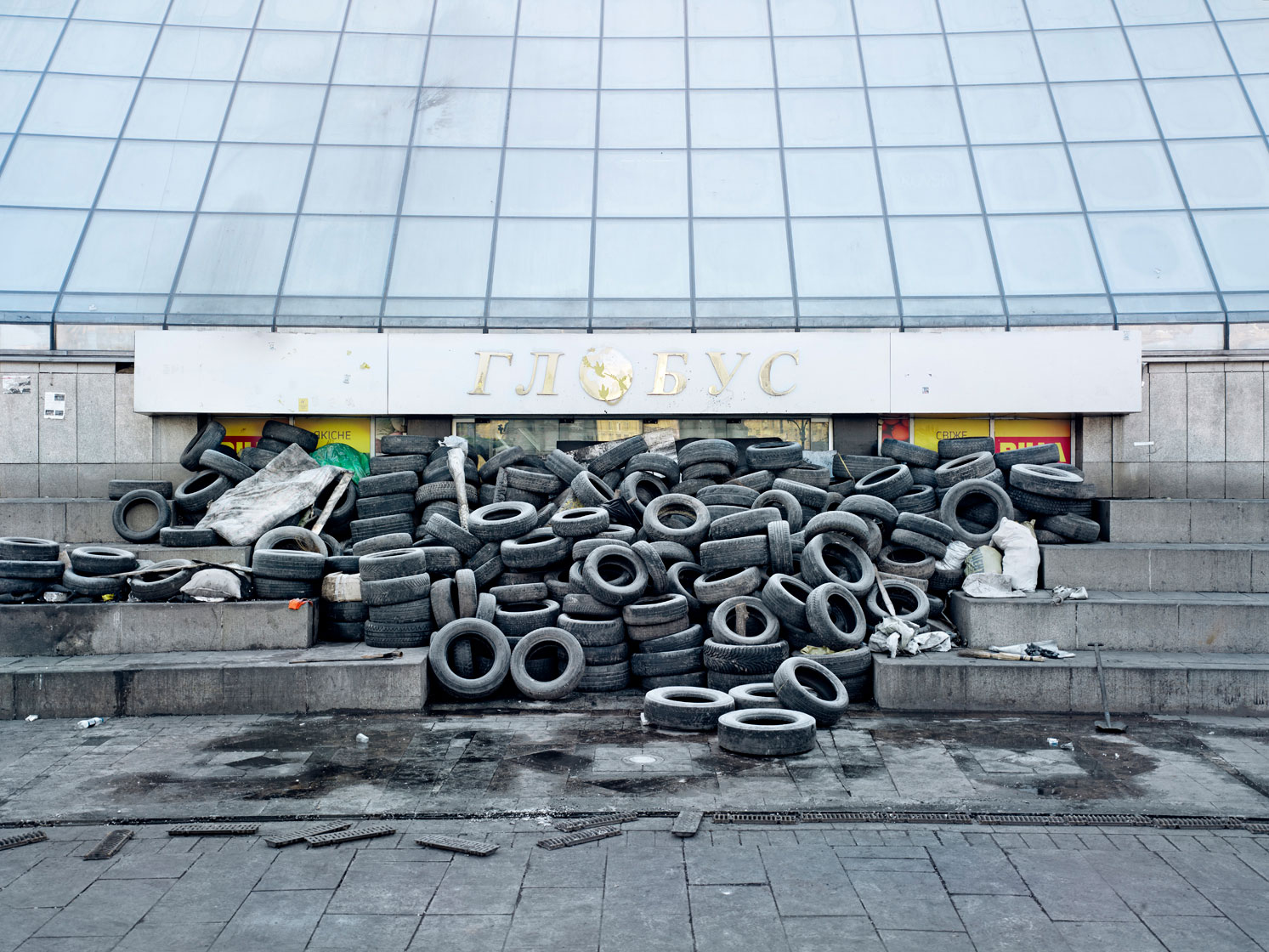
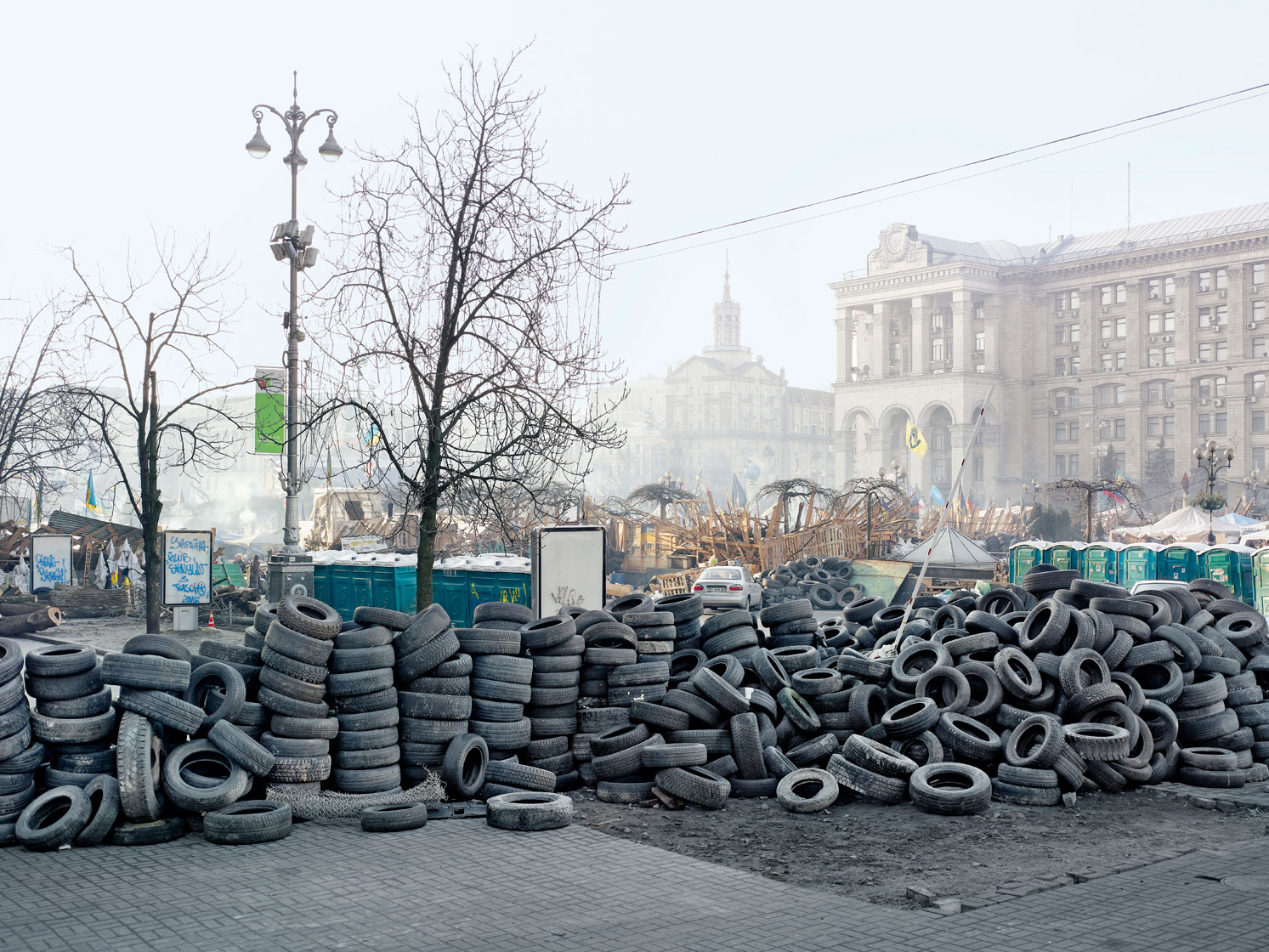
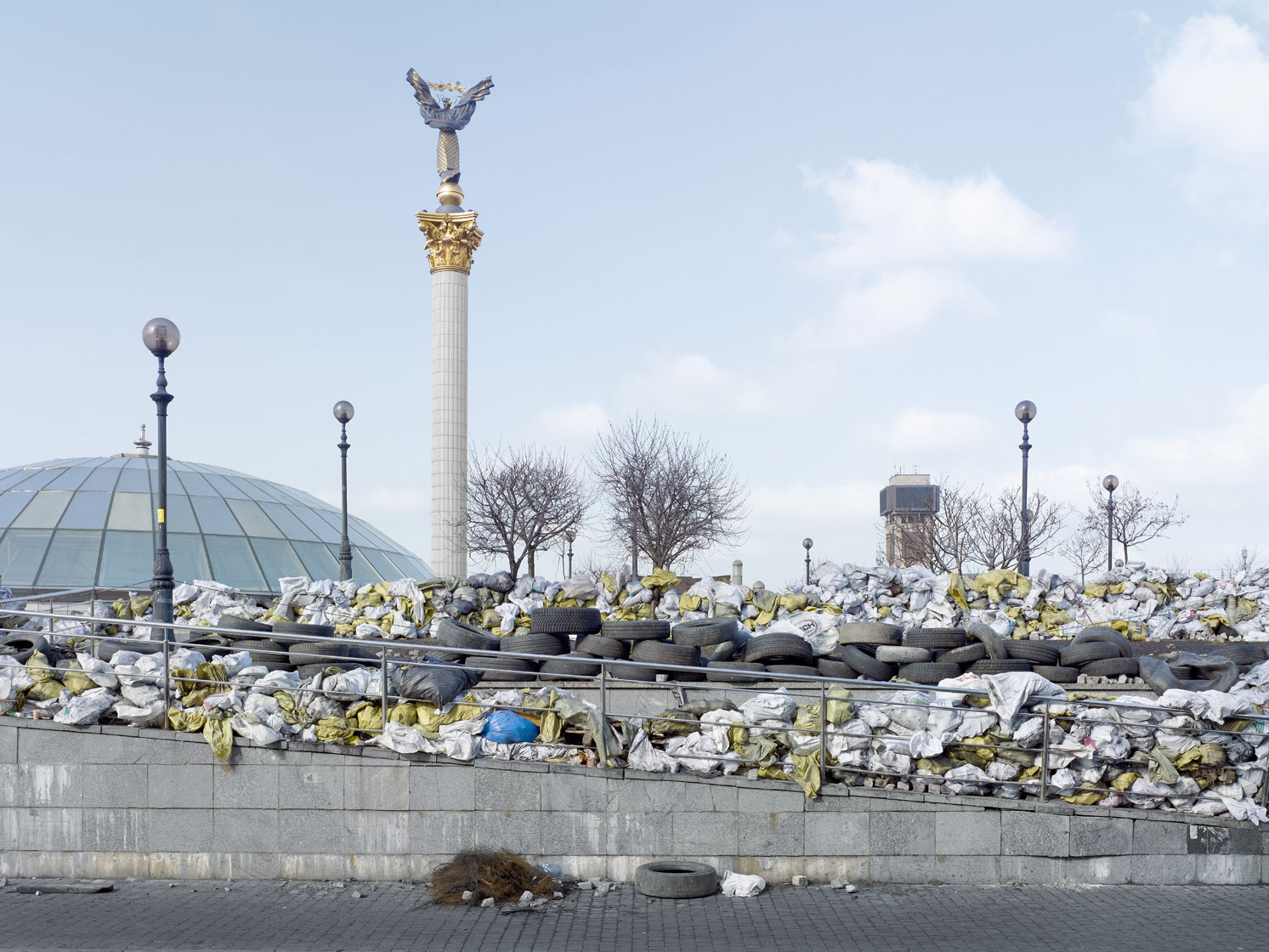
The barricade, making and breaking regimes, has quickly become a symbol of revolution.
The mere mention of it evokes the exasperation and fear, the hope and enthusiasm, and the failures and martyrdom of those who fought
on one side or the other of these ephemeral structures.
My stay in Kiev was unrelated to the events that inflamed the city in winter 2014. I did not go to the Ukrainian capital to photograph the
barricades but the Motherland monument a few kilometres from the epicentre of the protests. I arrived on 23 February, the day after the
overthrow of President Vikor Yanukovych brought an end to the clashes in Independence Square. I decided to utilise this moment of
“non-insurrection” and go there, without really being aware of what was drawing me to it. Perhaps it was a fascination with a necessarily
temporary visual vocabulary, or because it was a rare opportunity, potentially overwhelming, to get close to a barricade?
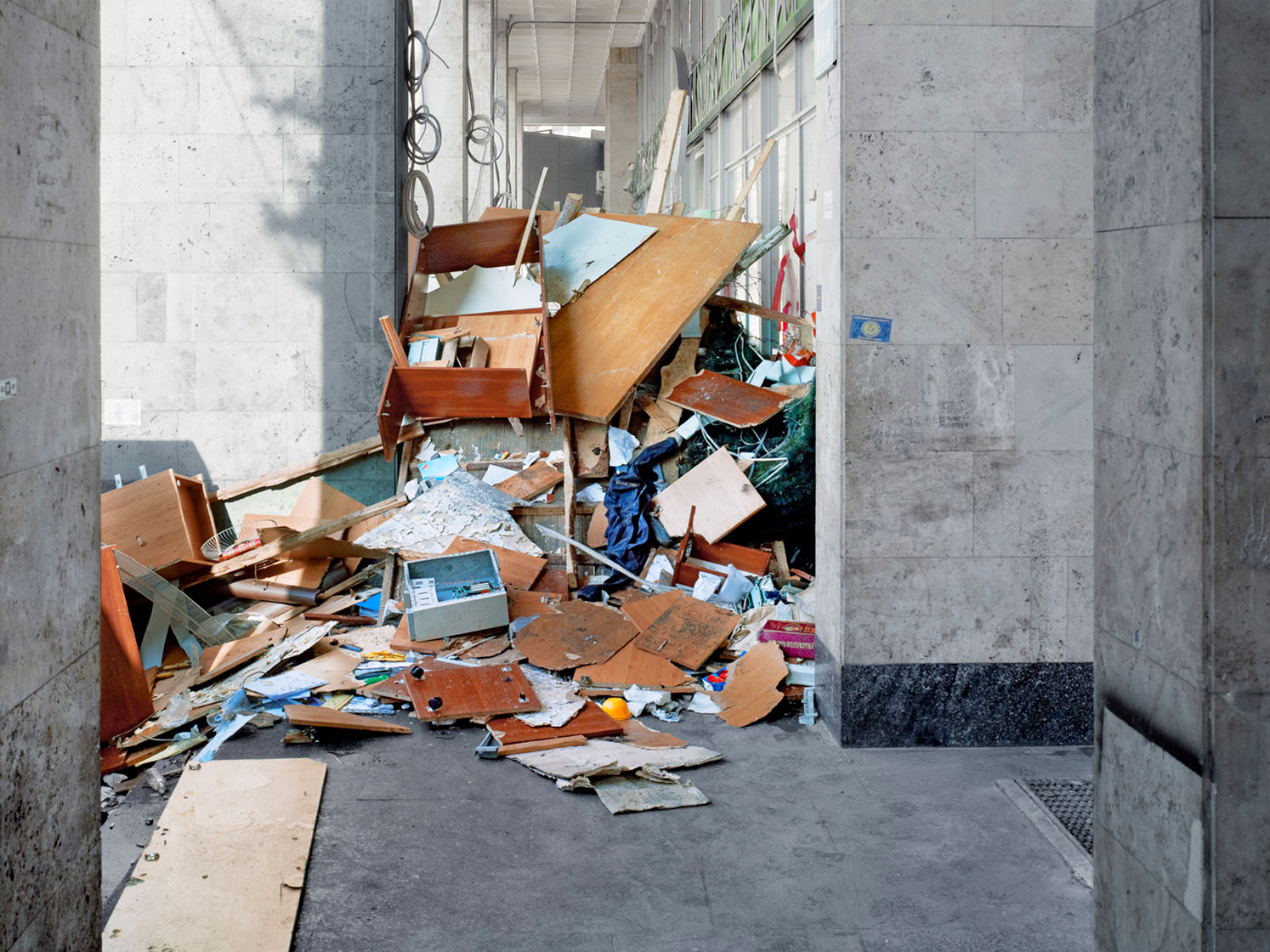
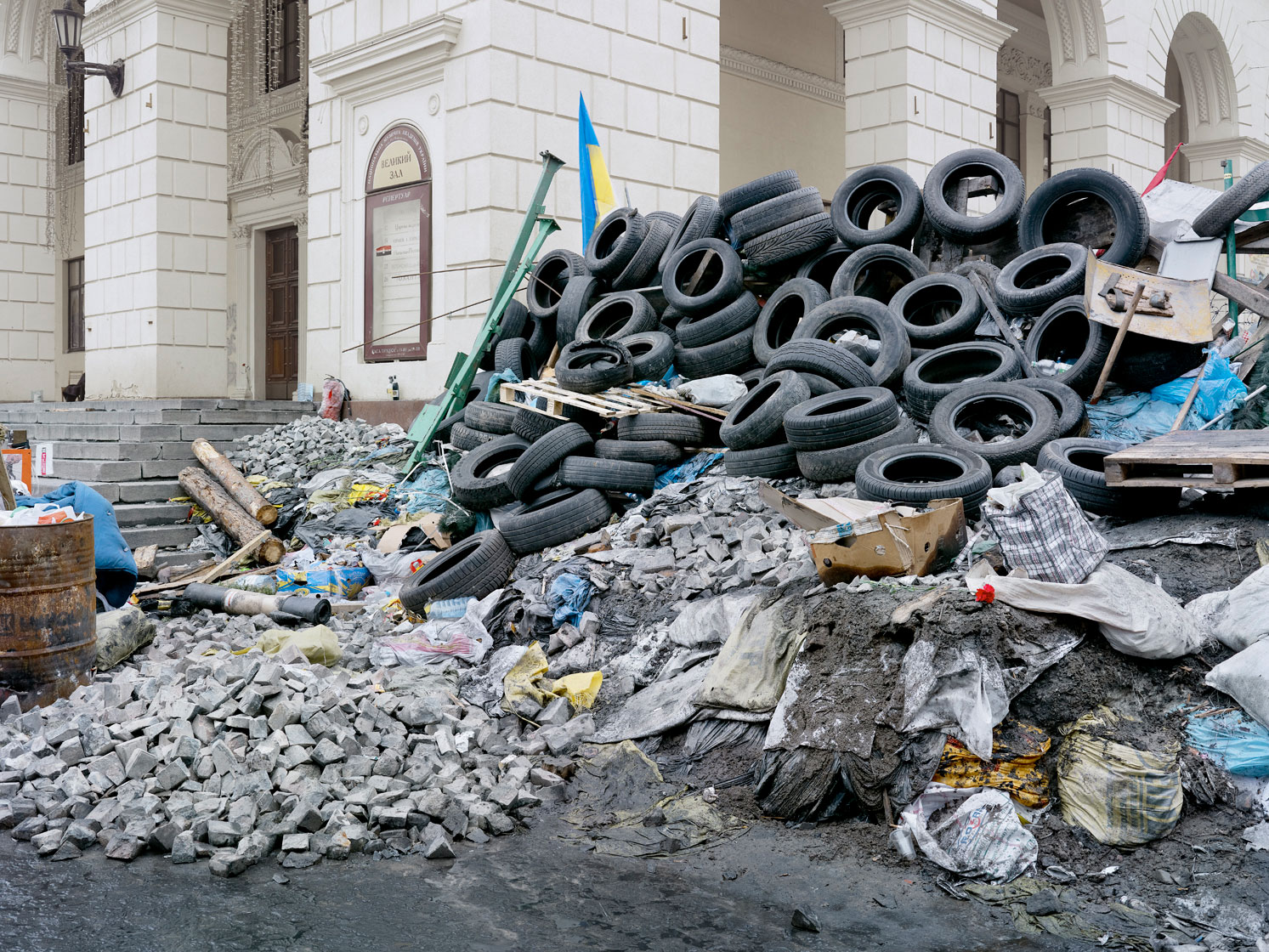
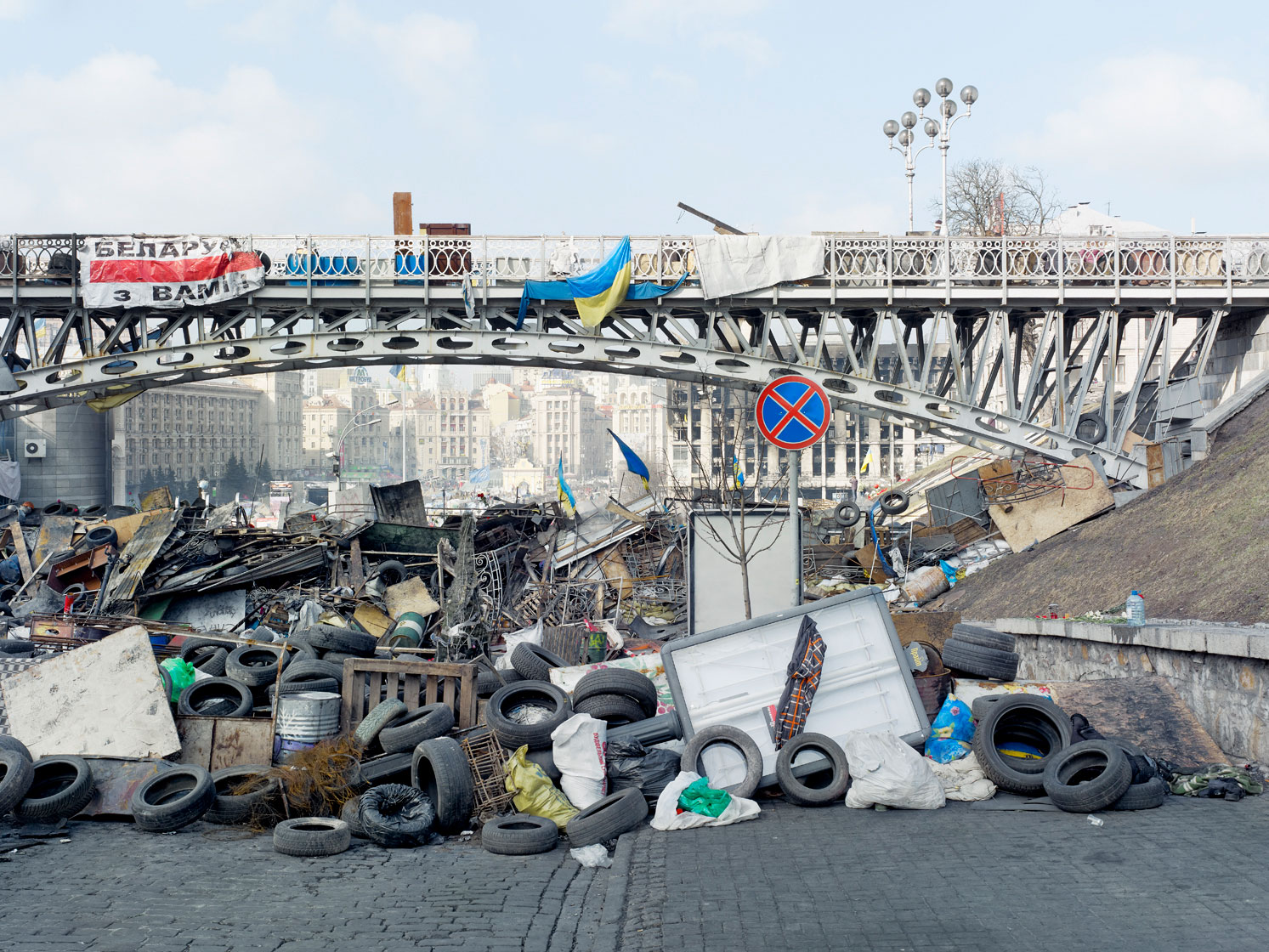
The materiality of the barricades was immediately impressive, I was struck by their physical presence and the power of the uprising that
they represented. The barricades and the city were intertwined, entangled, the city’s boundaries had been redrawn. Materials obtained by
demolition or simply wrenched away were assembled in heterogeneous heaps, seemingly without foundations, that had taken over the
highway during a temporary period of chaos. I found a series of structures that forced a rupture with the ordinary perception of social
space and time, almost a desecration of the everyday.
So I wanted to photograph this city, deprived of its areas of visibility and e xperiencing an apparent suspension of time. While the street
allowed some traffic, the barricades had to play a role in the city as a means of blocking that flow. They were moved and transformed as
required, making their outlines sometimes hard to define, apparently exceeding the framework of the pile itself, annexing buildings,
fracturing the field of vision.
Spontaneous structures of resistance, at once construction and destruction, barricades look like walls, even if their form is undoubtedly
defined by a network. Diverted from their original function, the objects that constitute them are given a second life and take on a symbolic
dimension. As one approaches, the materials come powerfully into focus, as if animated, and the entanglement can be seen as the result
of a job of work, a quasi-artistic creation, despite its imperfection and haphazard construction.