INFORMATION
CORPUS CHRISTI
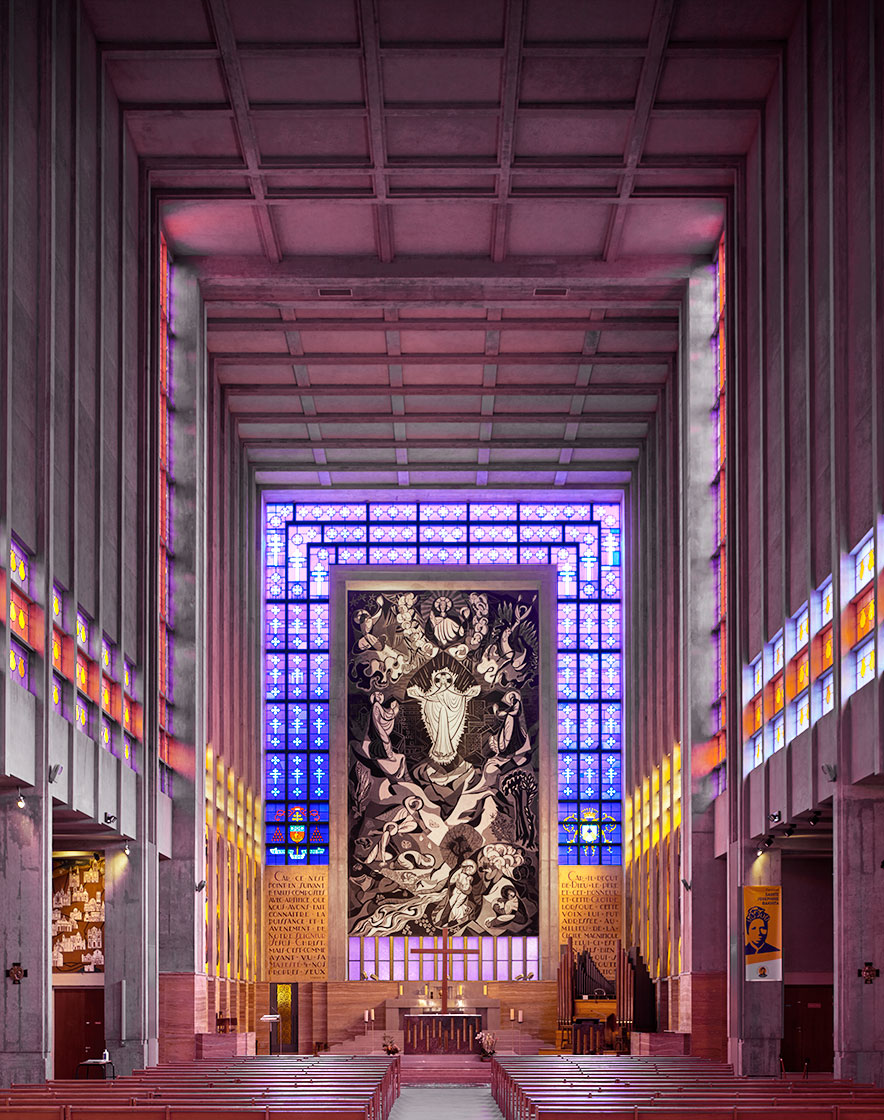
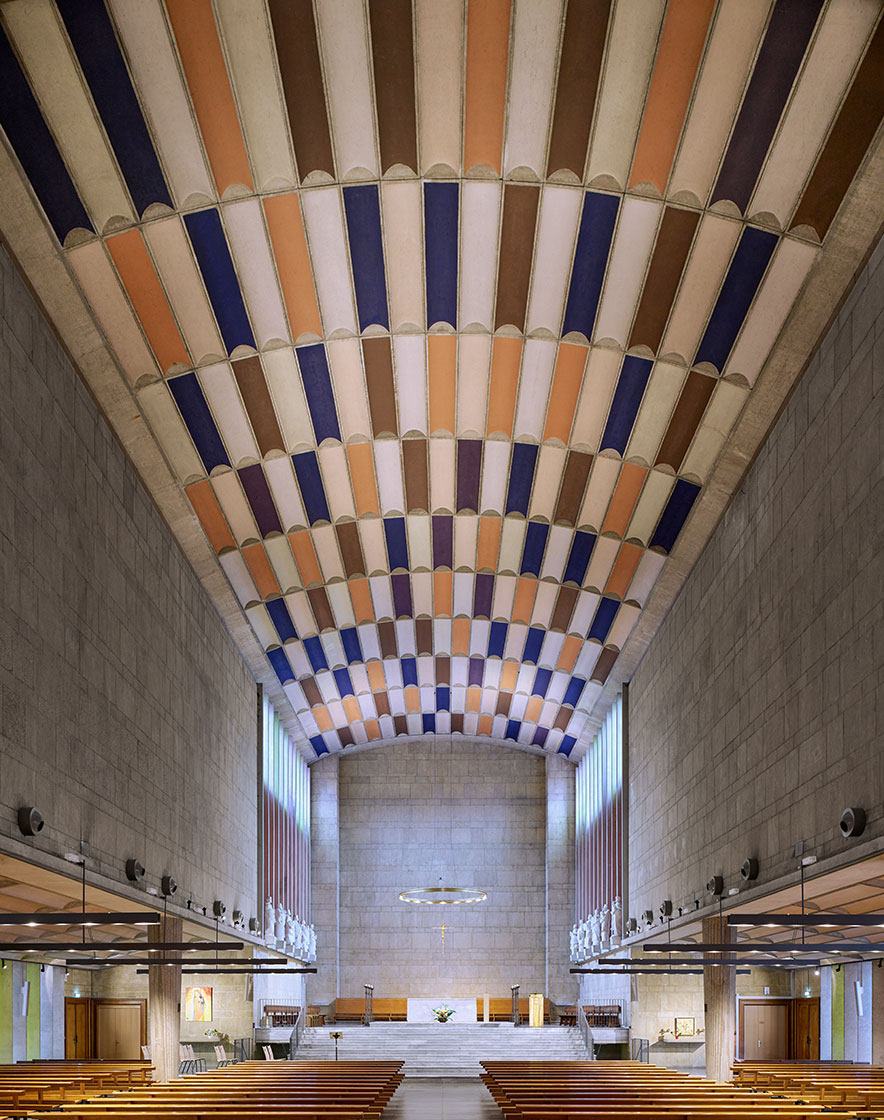
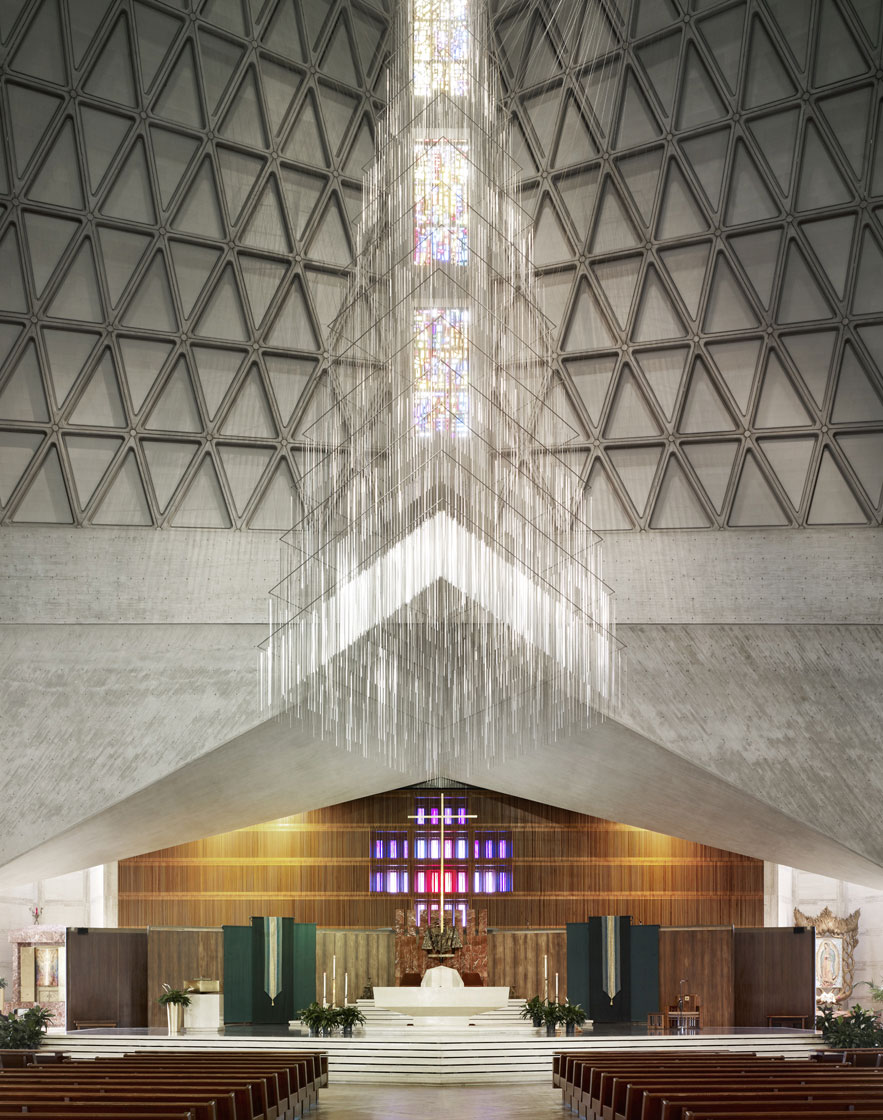
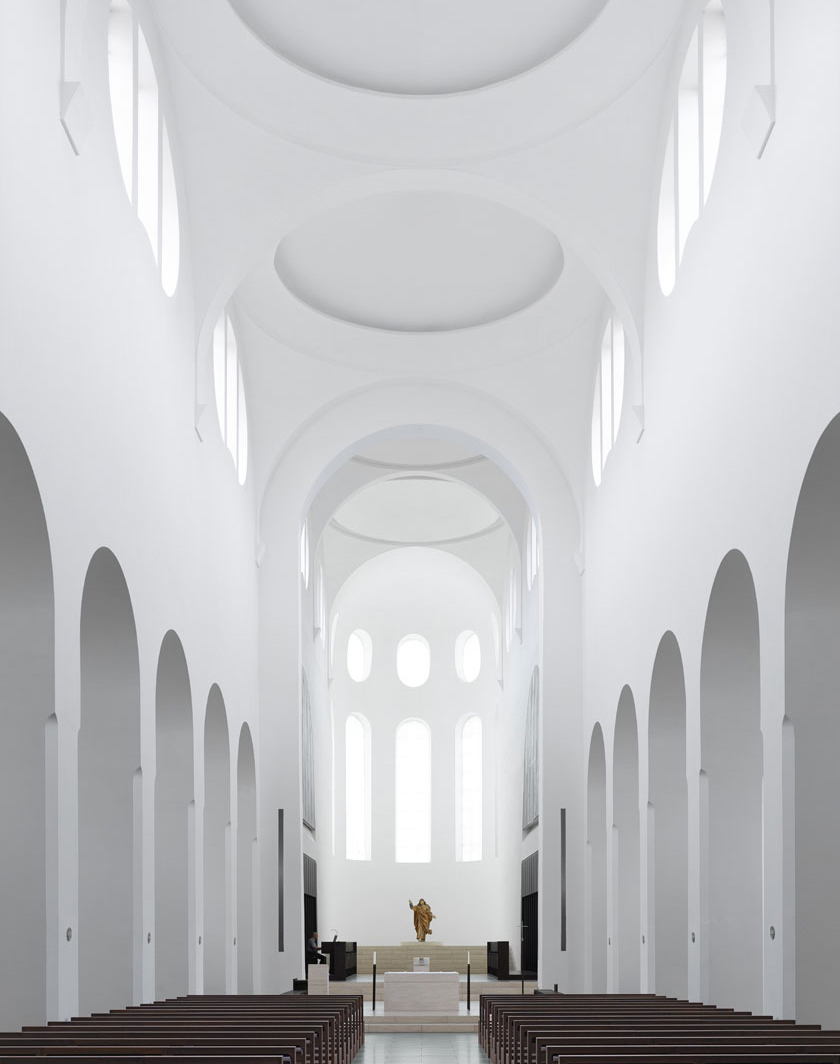
“Corpus Christi” pays tribute to the architectural aesthetic of the new places of worship whose hymn to minimalism represented a genuine creative
inspiration in twentieth century Catholic architecture.
Part of a movement that began in Europe in the 1920s and continued by great names including Guillaume Gillet, Gottfried Böhm and the Perret brothers,
these buildings reveal a new approach to the Sacred, an evolution of ideas tending to break free from the ceremonial without destroying it. The advent of
new materials made way for a wide range of new shapes and plans, redefining the organization of the sacred space as well as the l ayout of essential
liturgical elements. Nowadays, a believer needs to be able to identify with an endless number of structures within one institution.
Traditionally, the altar needs to stand out. Symbolizing the bridge between God and the Church, it’s the essential element of the celebration. Just as the
entire church is the source of spiritual life, the altar is the center of the church.
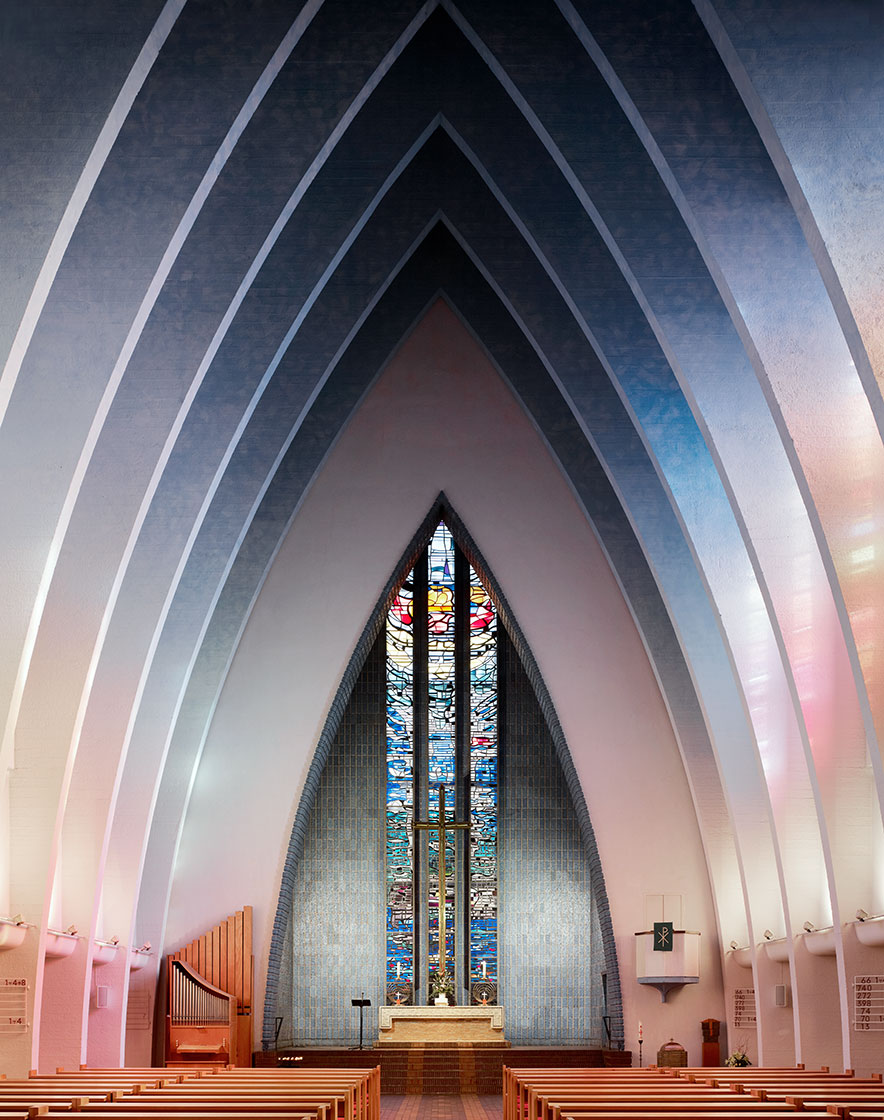
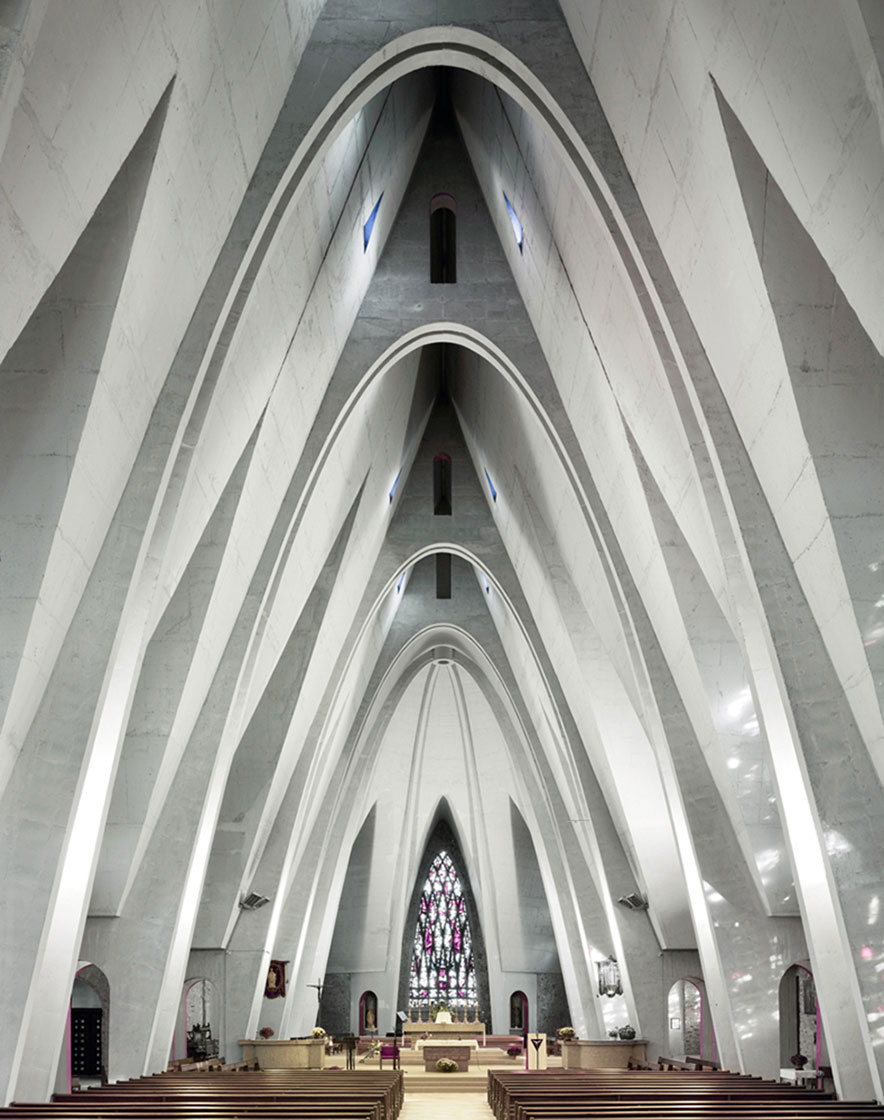
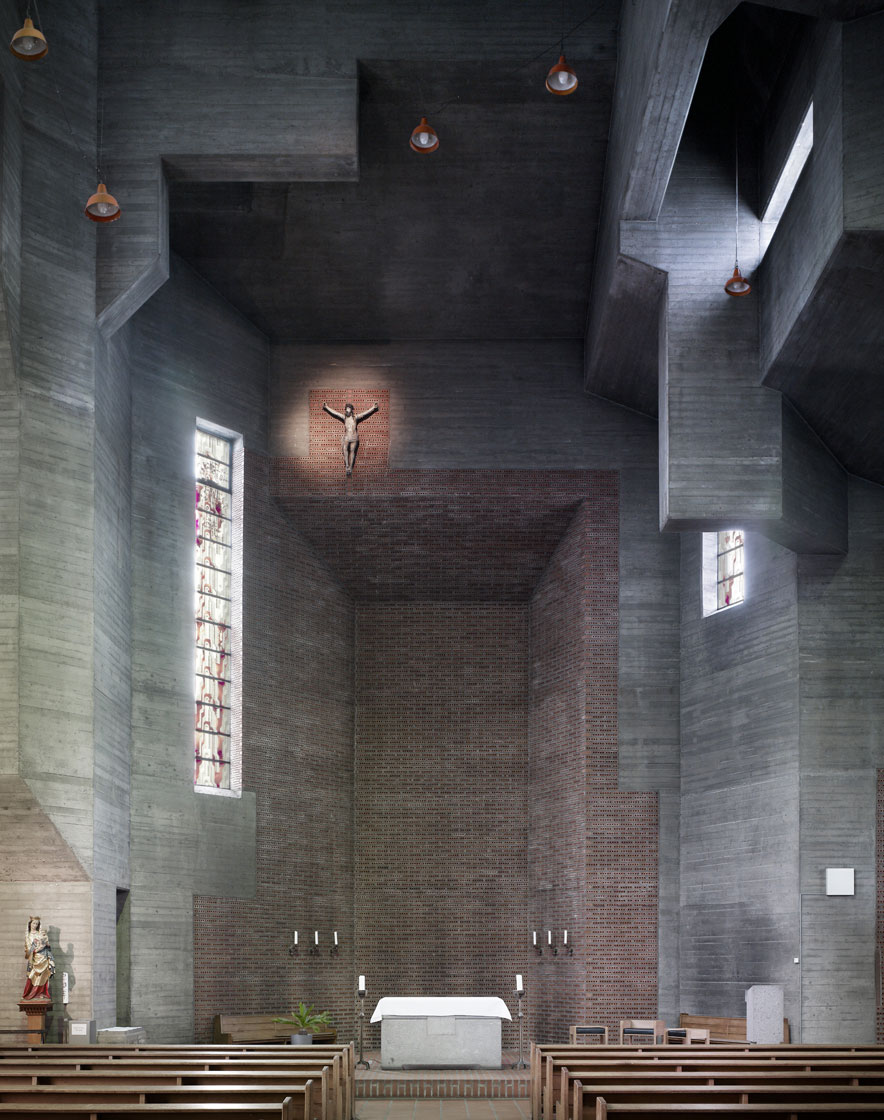
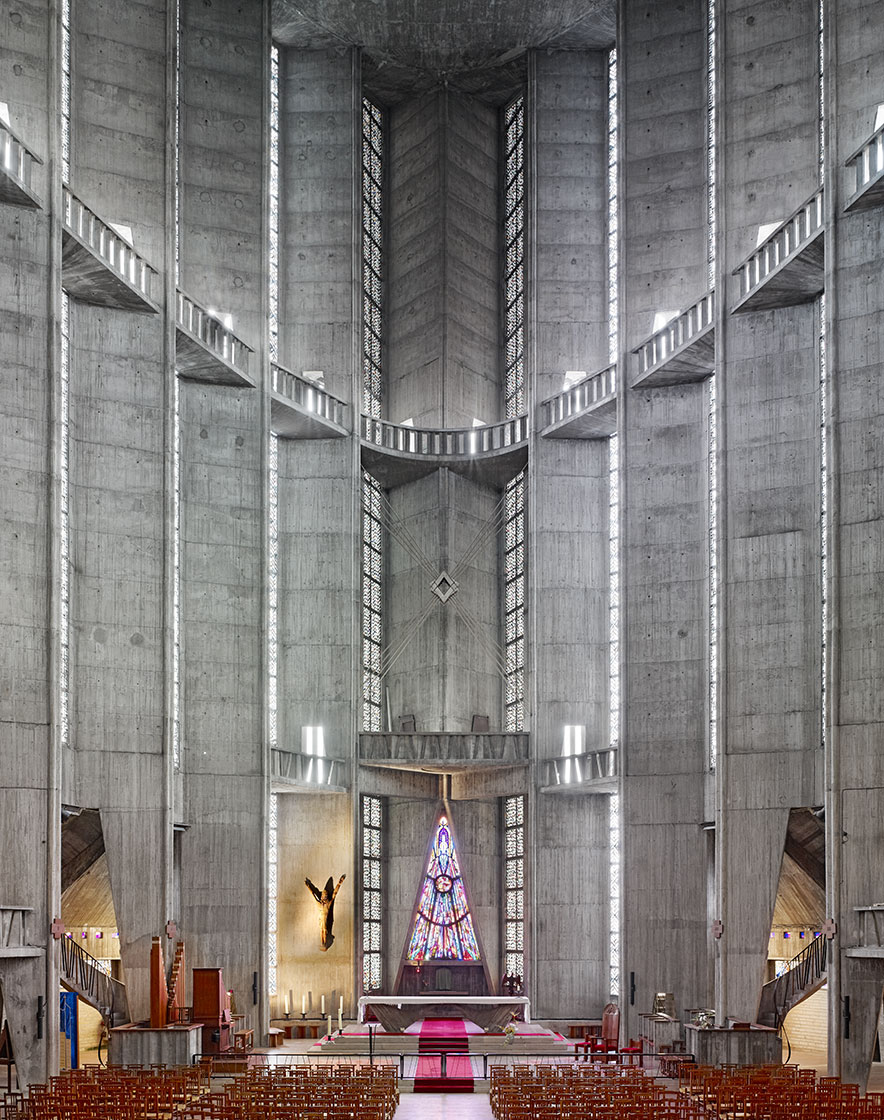
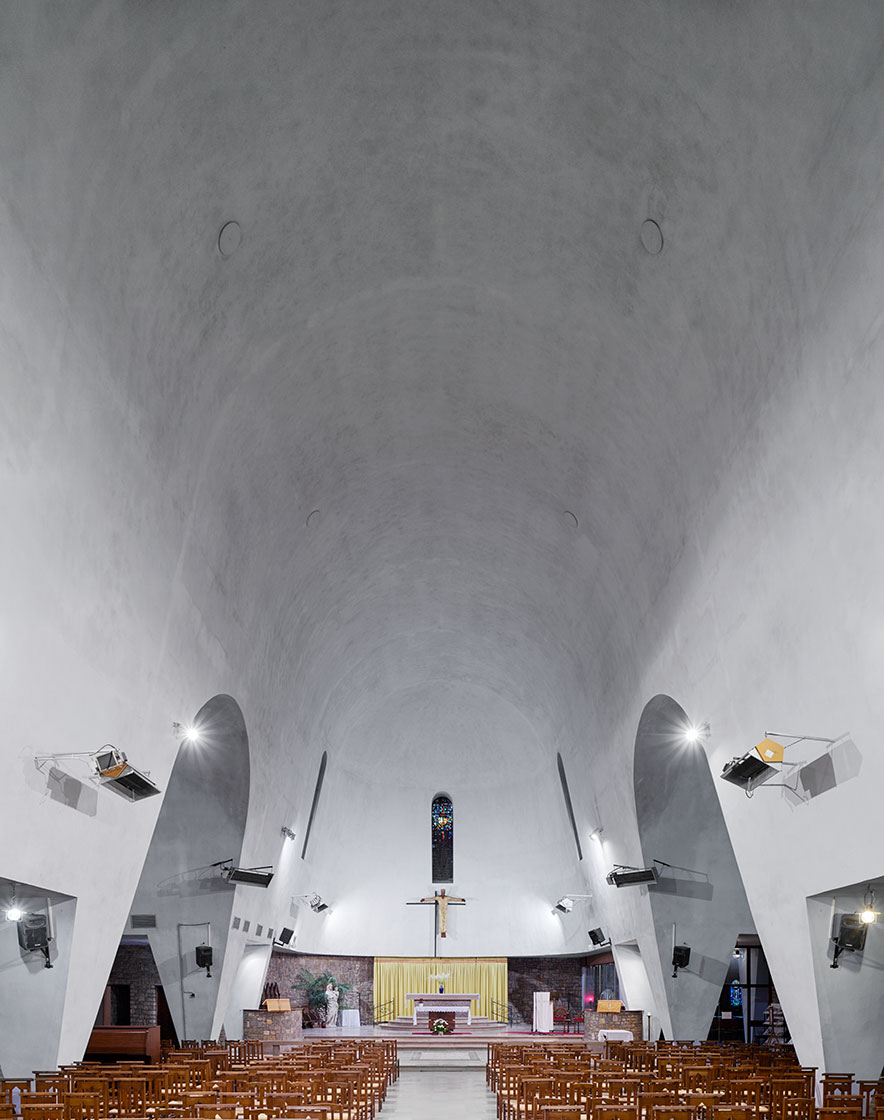
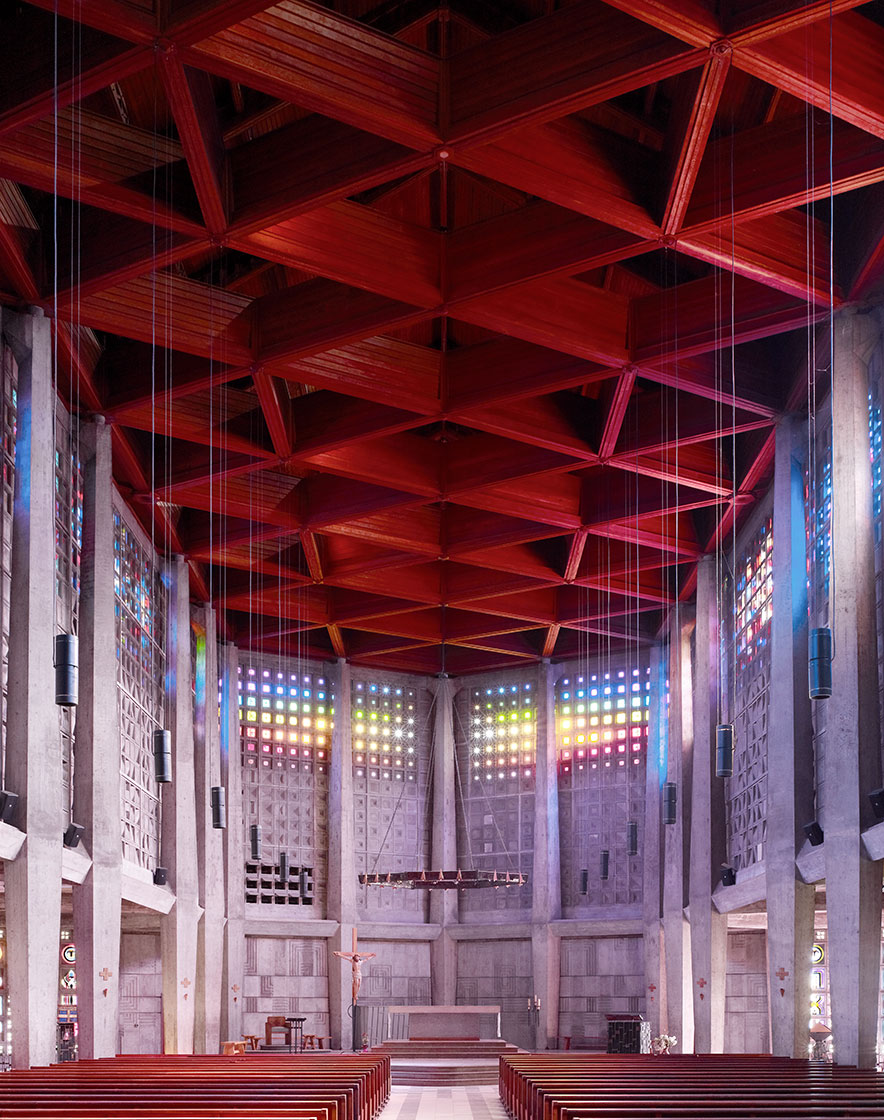
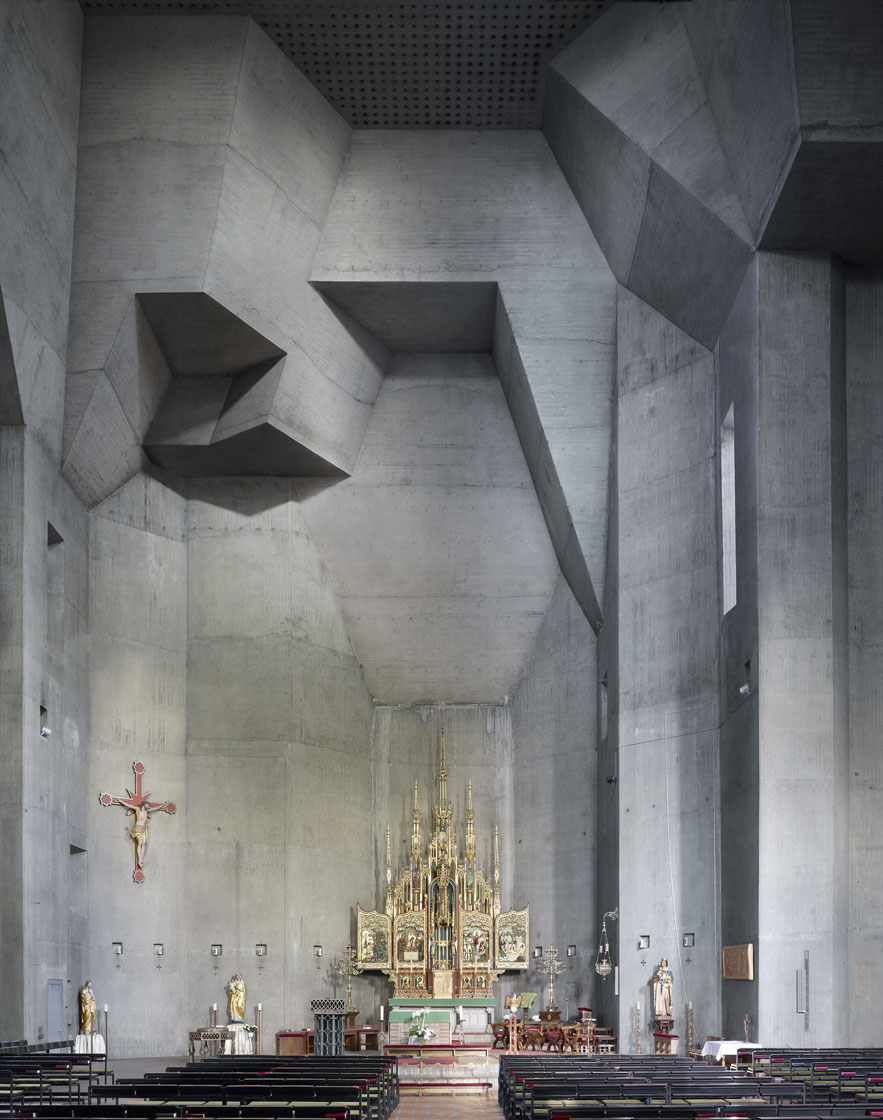
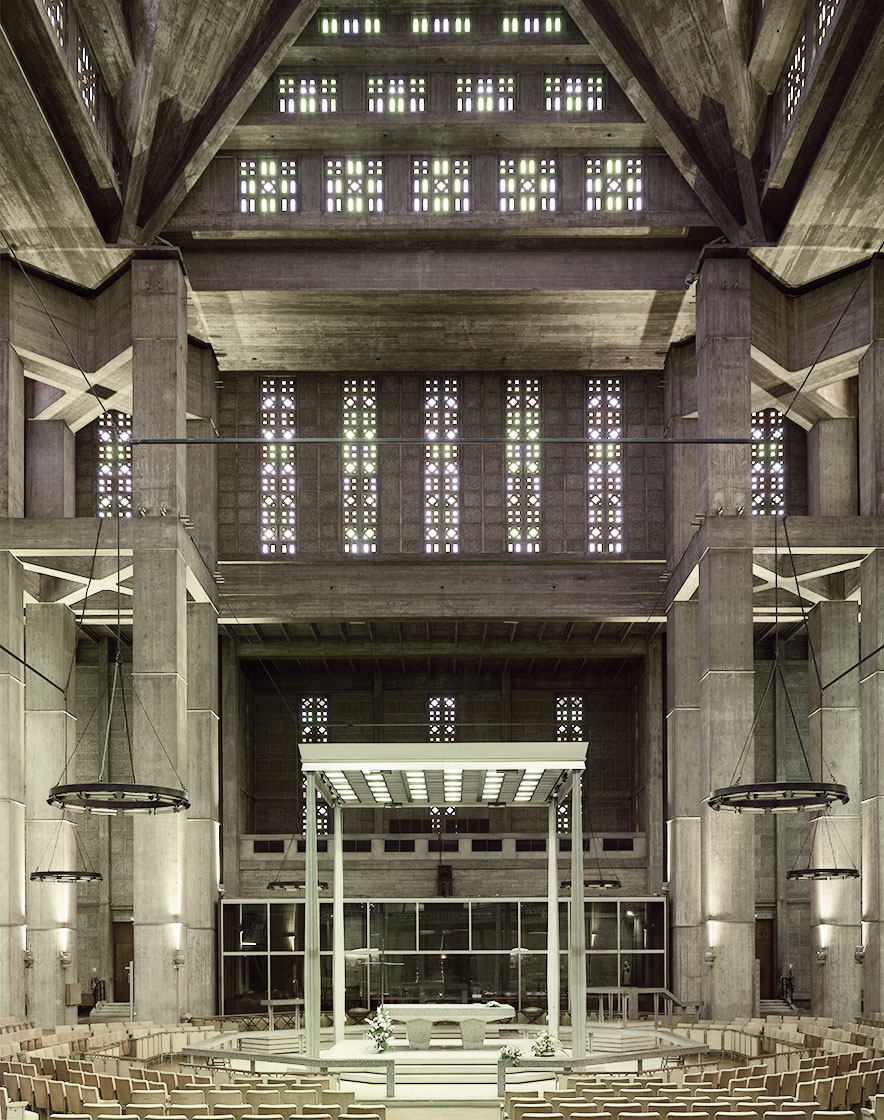
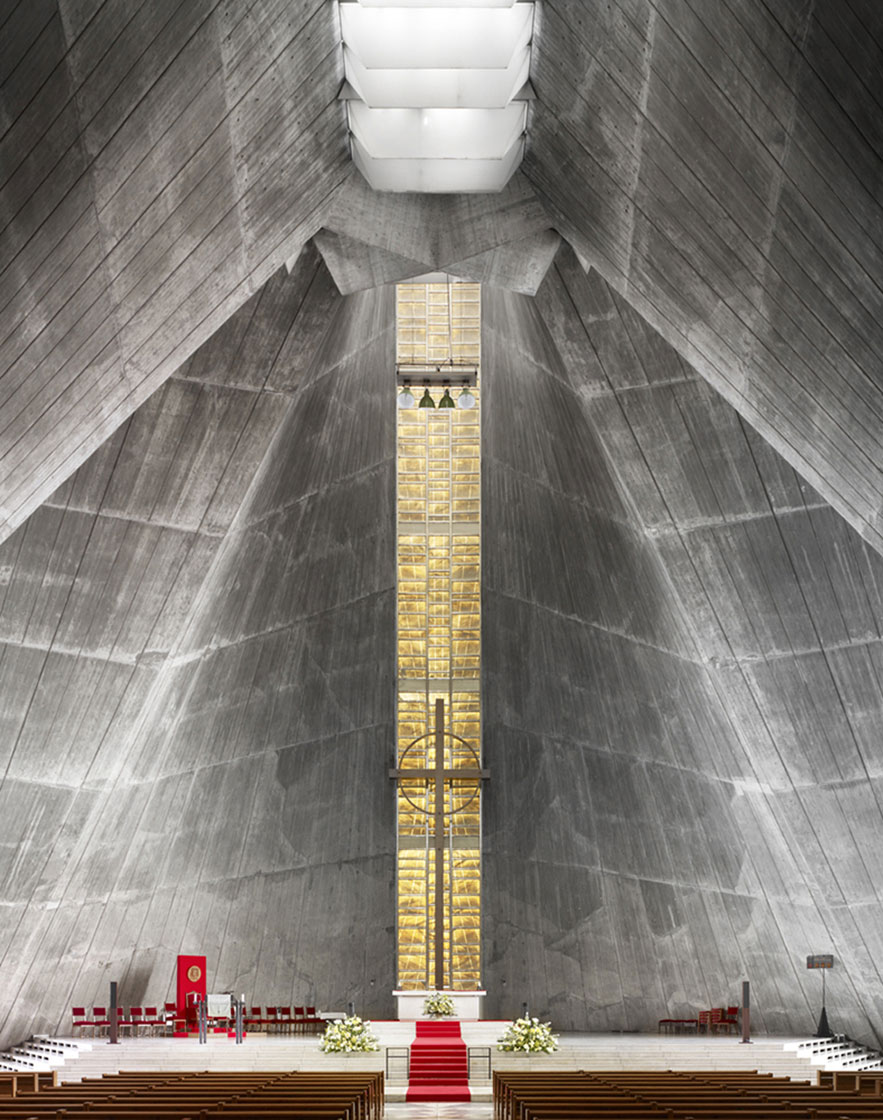
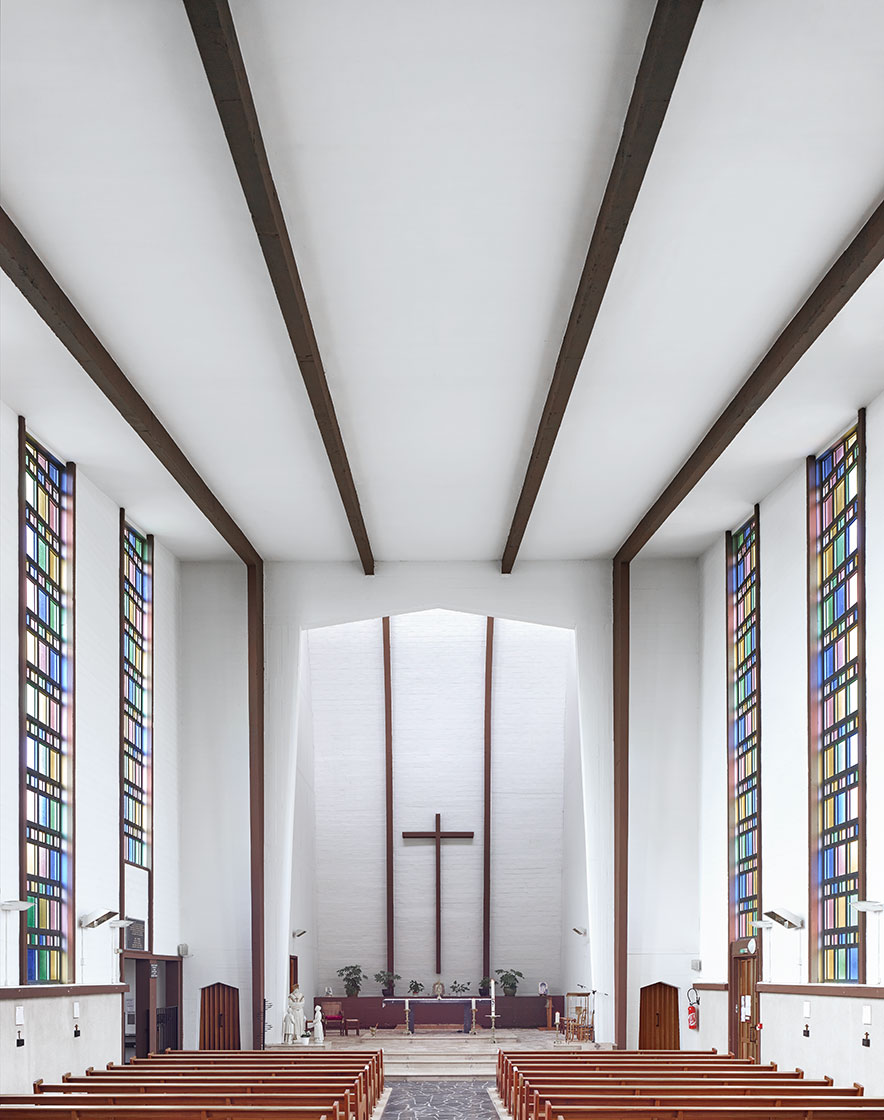
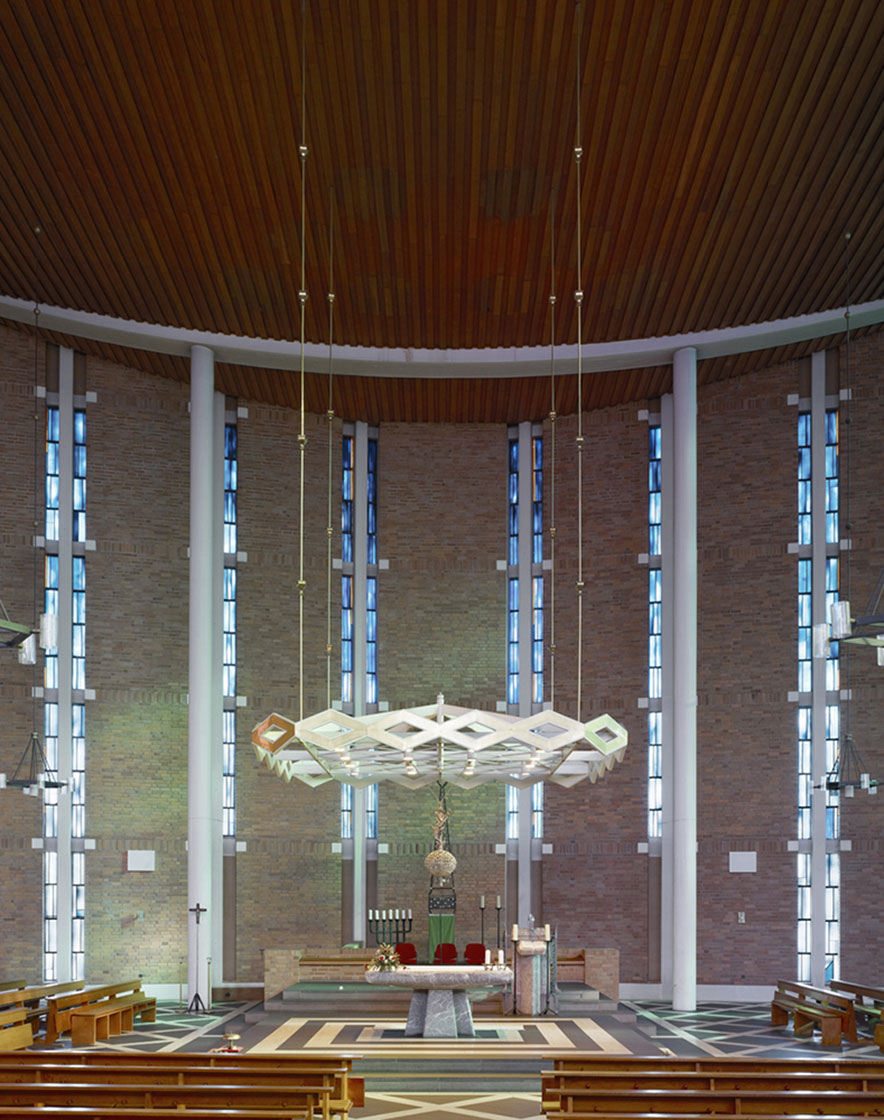
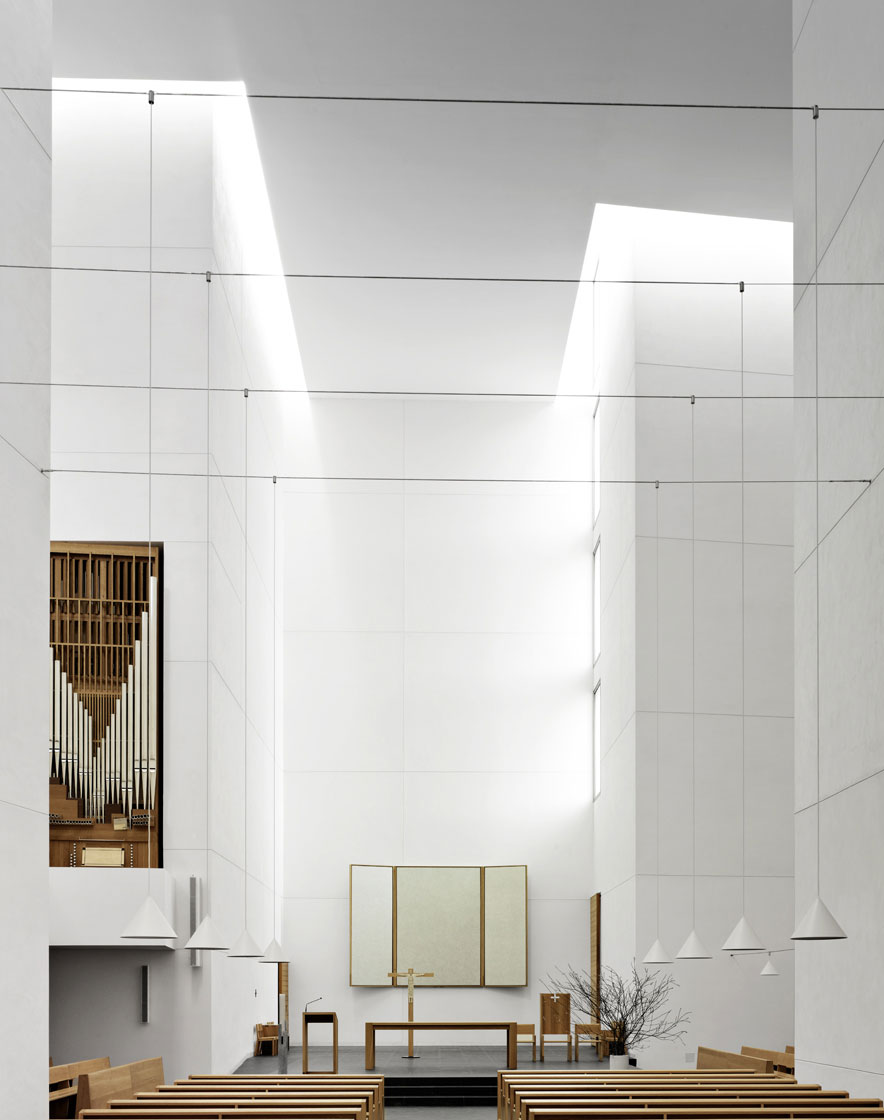
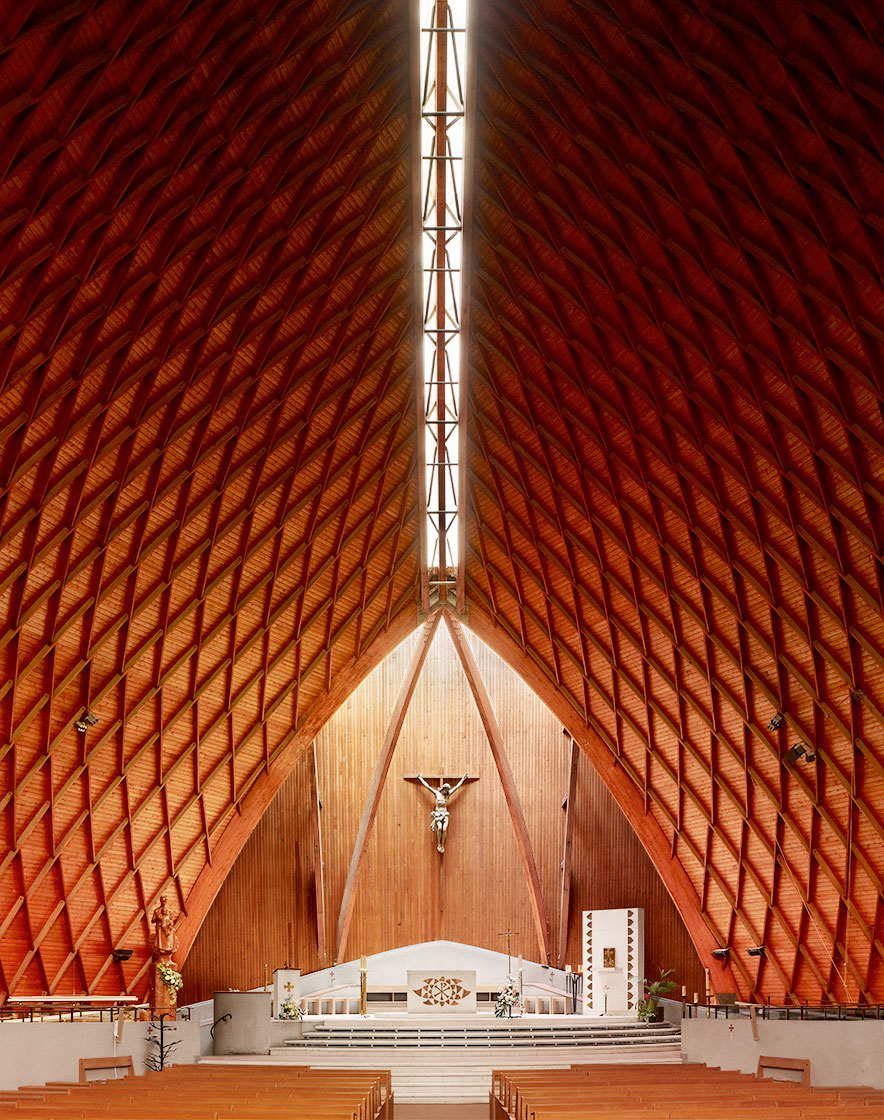
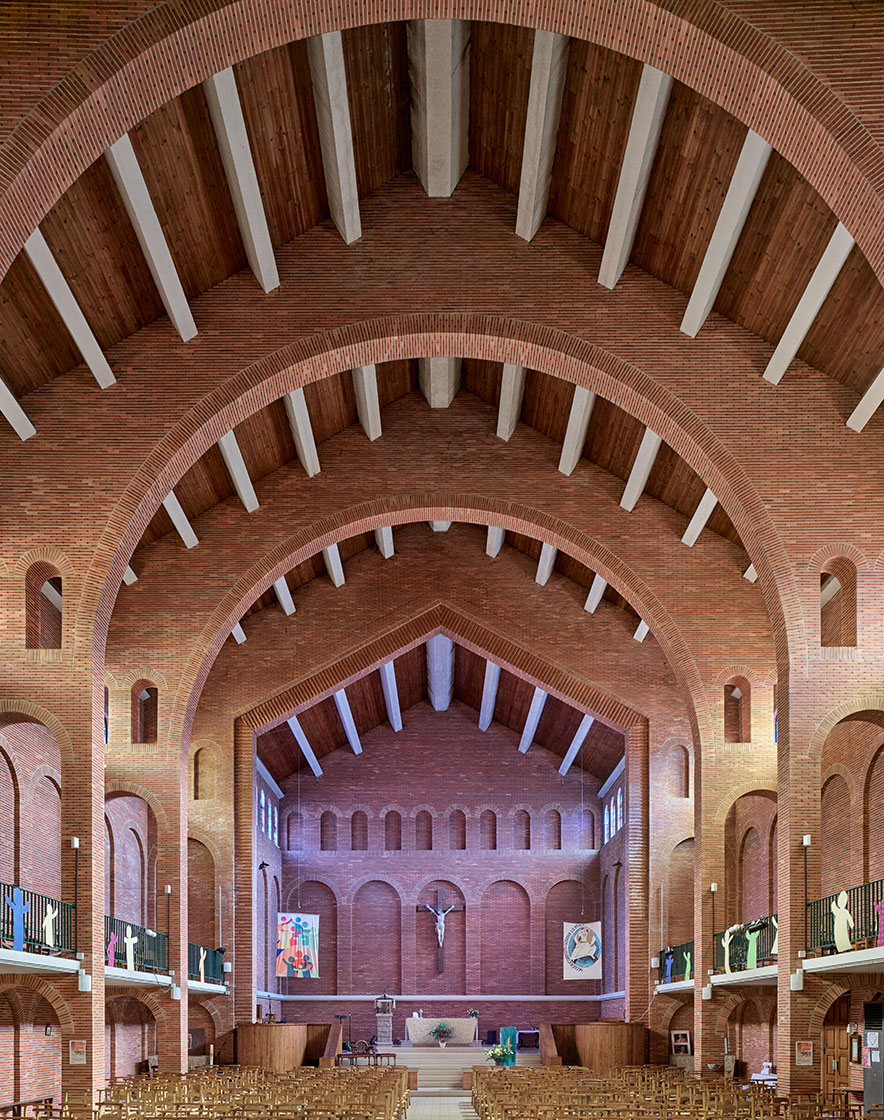
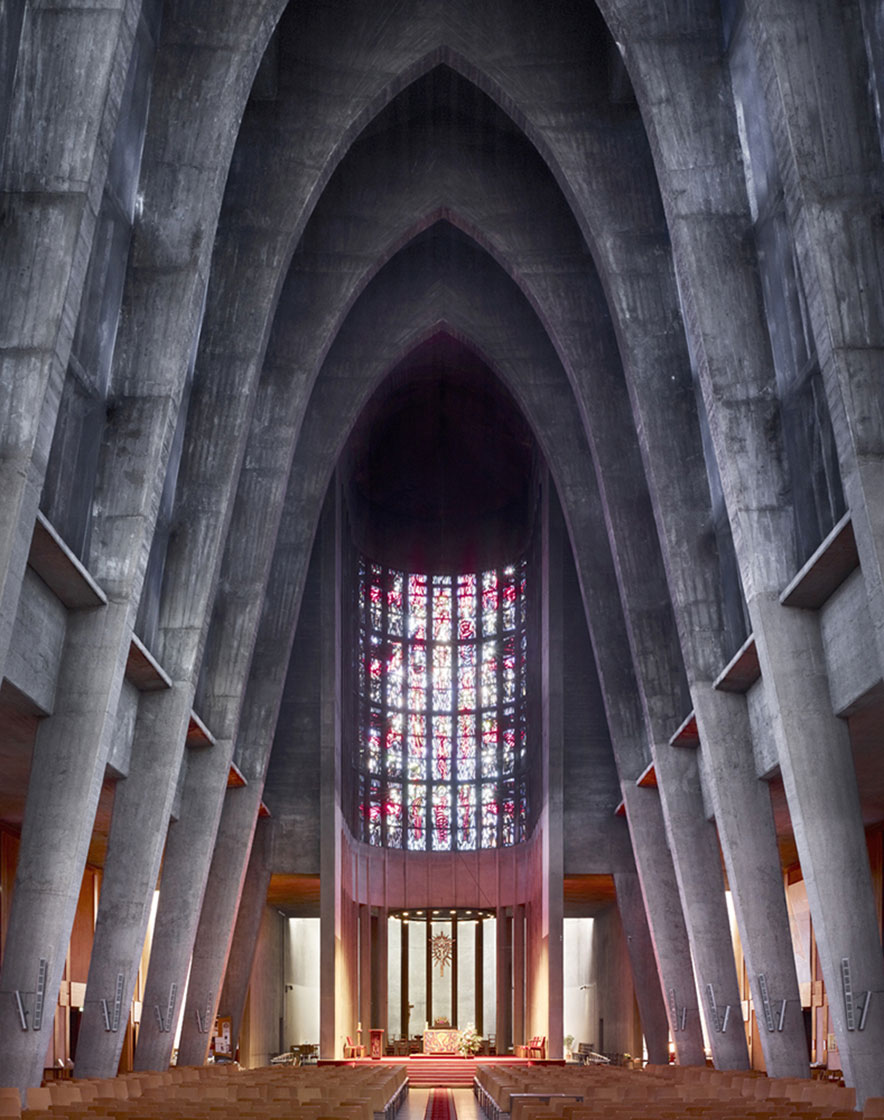
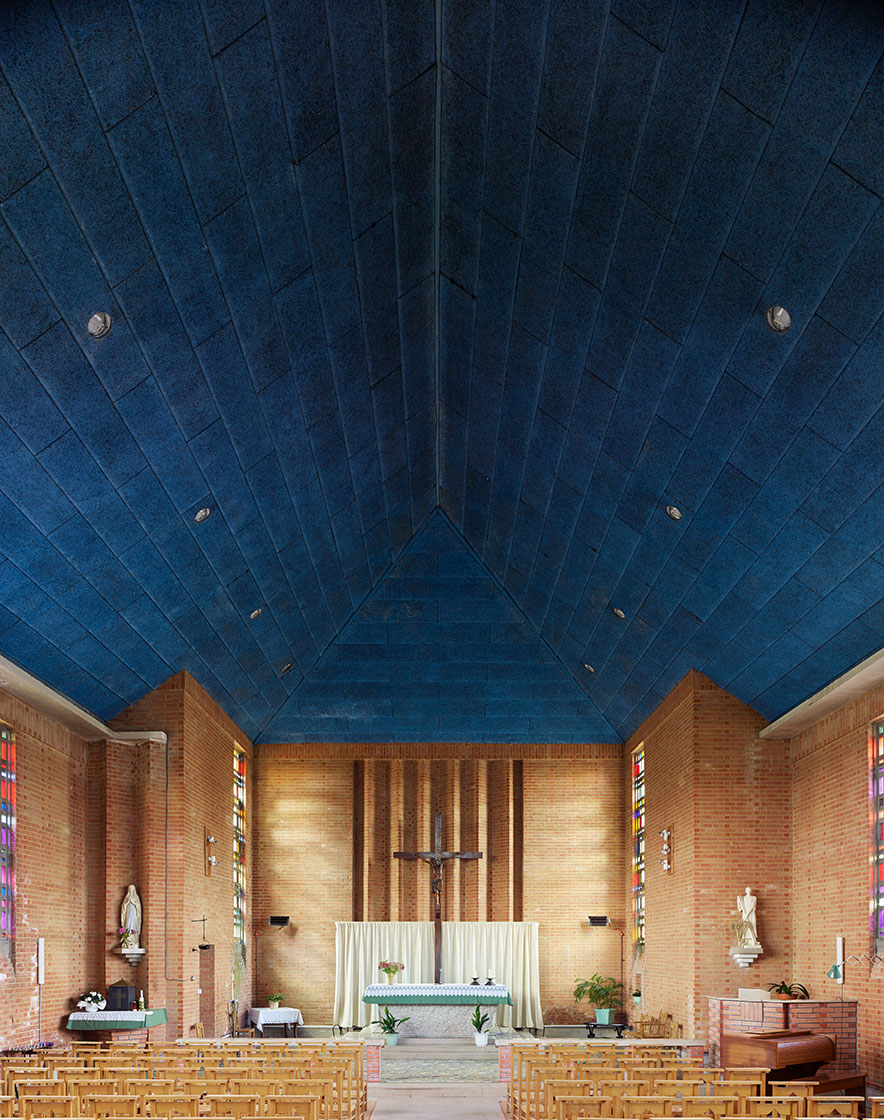
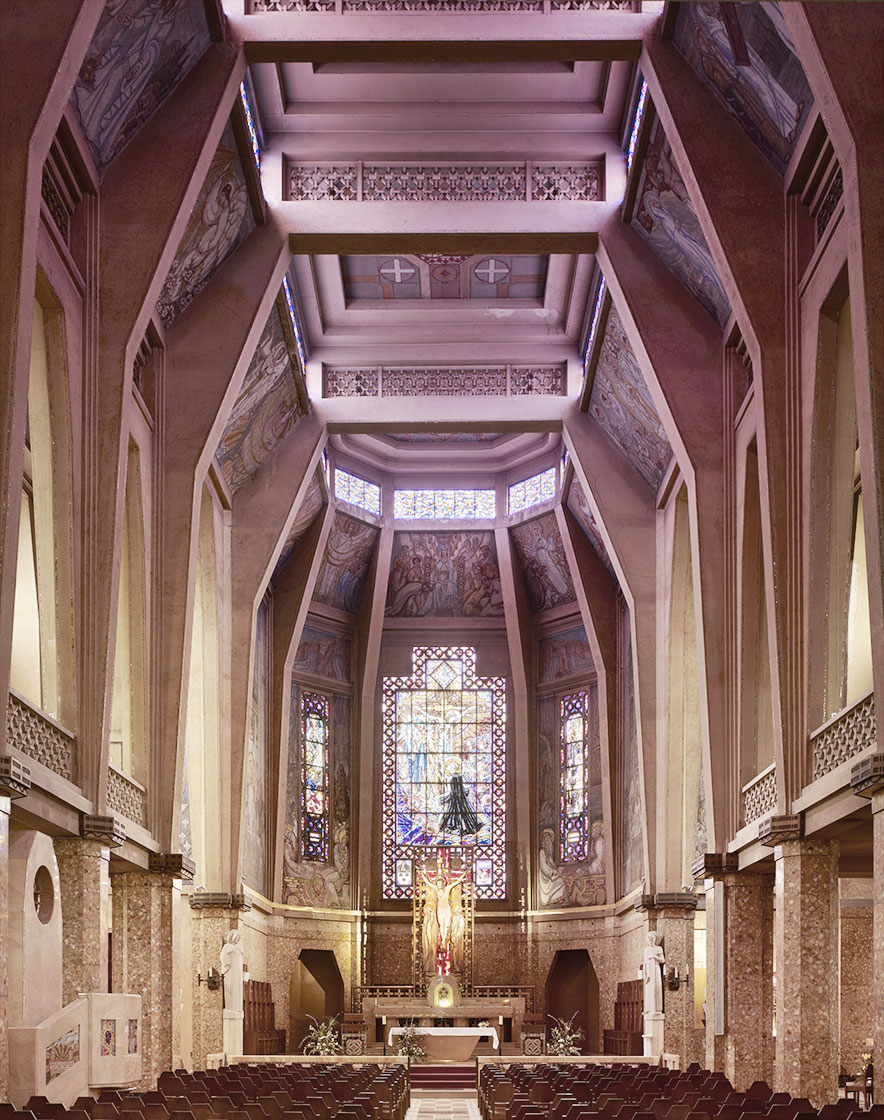
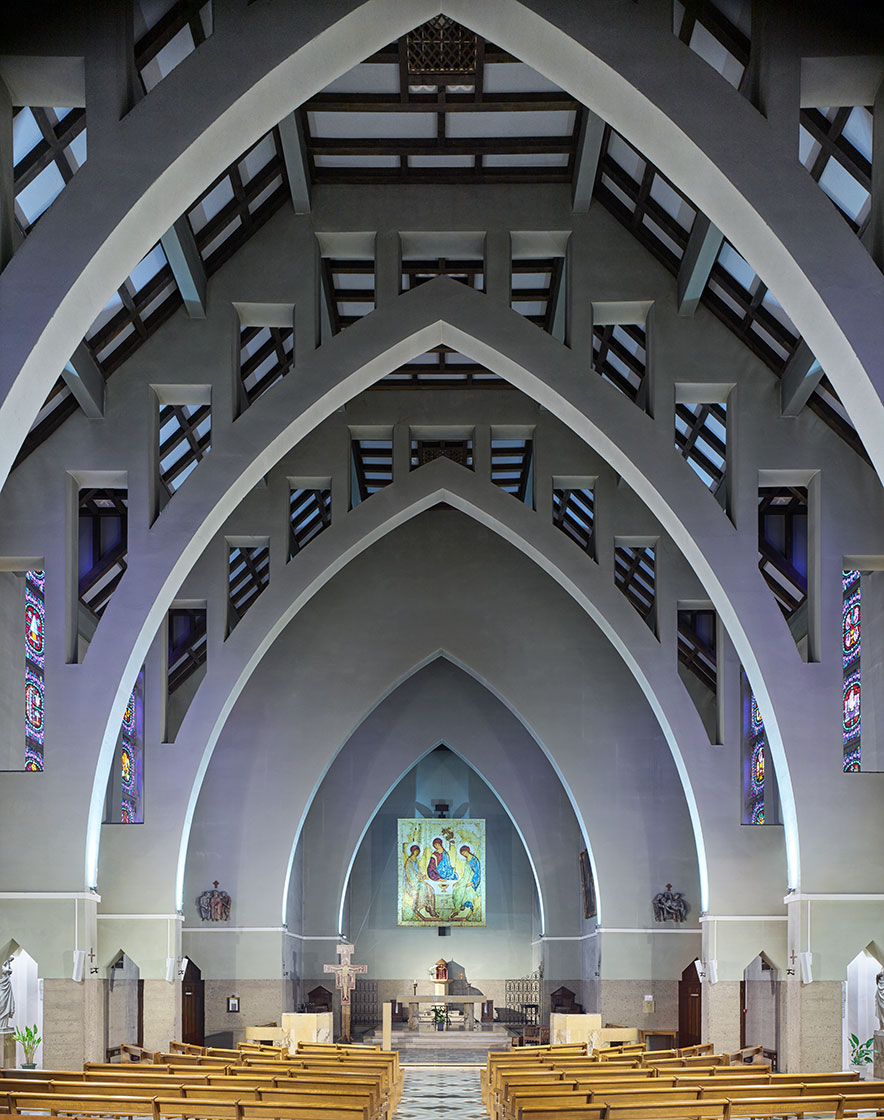
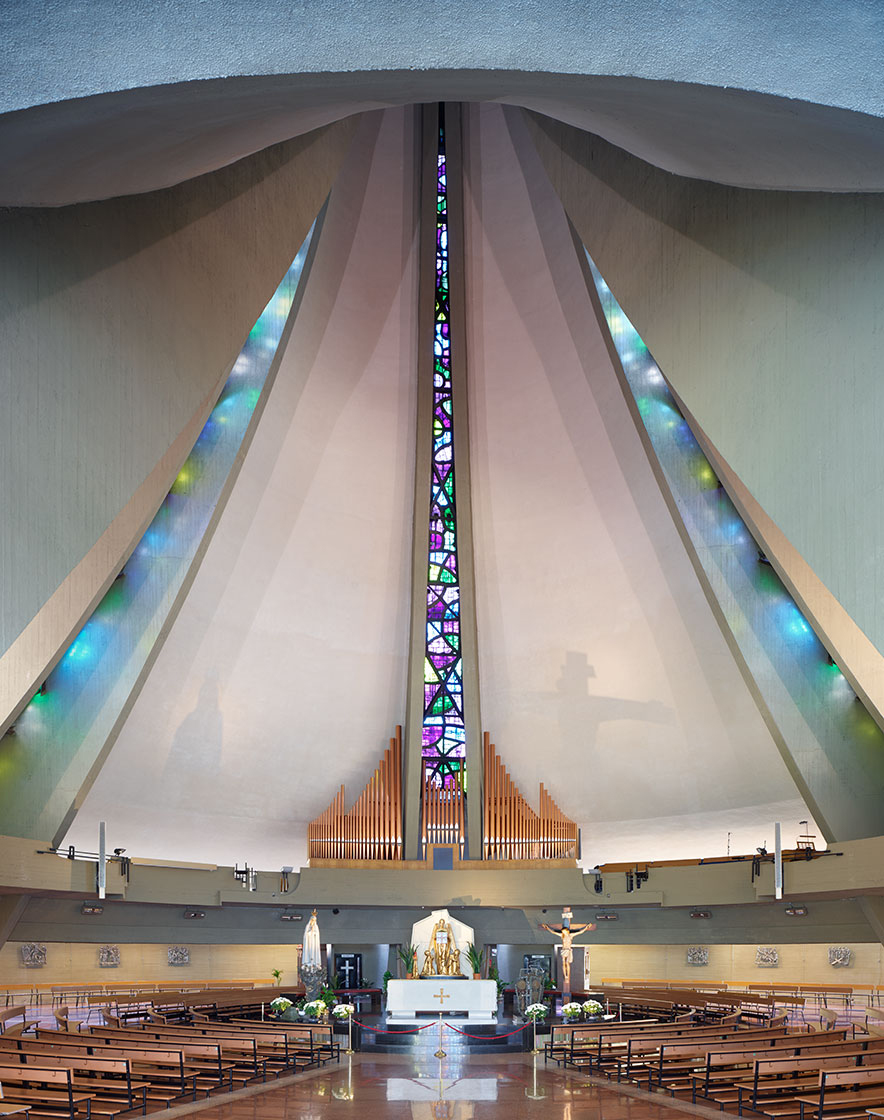
Fabrice Fouillet has chosen to respect this symbolism by always using a frontal framing centered on the altar. The altar is also always placed at the bottom
of the picture, dwarfed by the height of the construction. This symbolizes our smallness and reflects the vertical communication between the material
world and the divine.
This series doesn’t aim to set modern architecture in confrontation with religious tradition, its purpose is rather to analyze how contemporary shapes
contribute to the demonstration of the Sacred.
If liturgical codes can dictate the creation of modern forms, the spiritual atmosphere of churches appears to stem directly from their architecture. This
raises the opposite question: how does architecture influence the liturgy and the religious sentiment of the faithful.